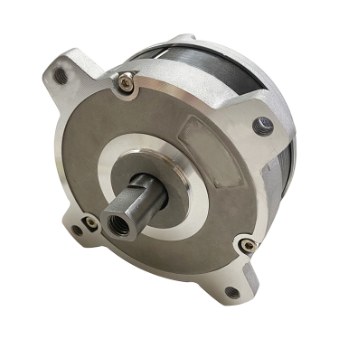
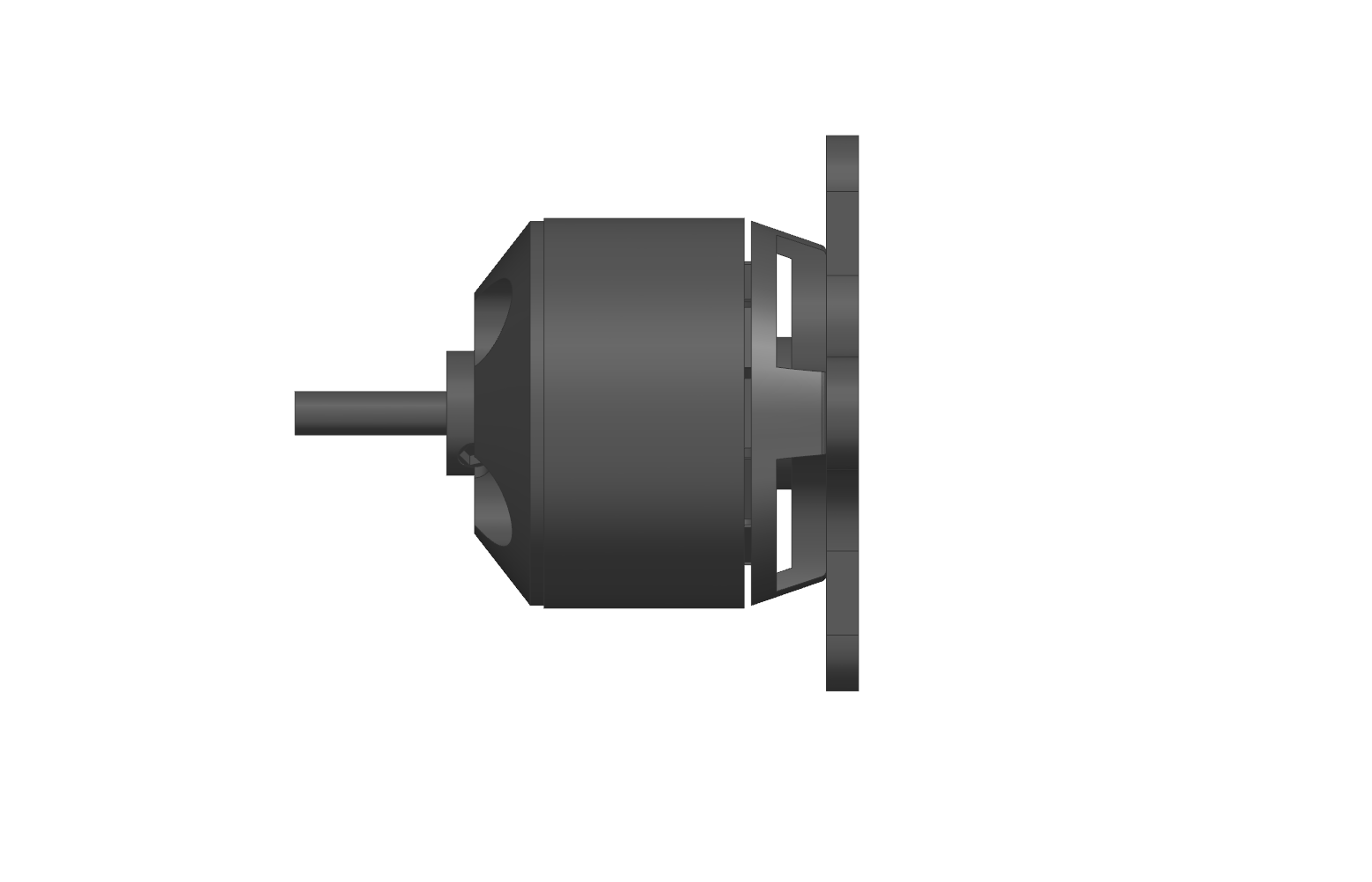

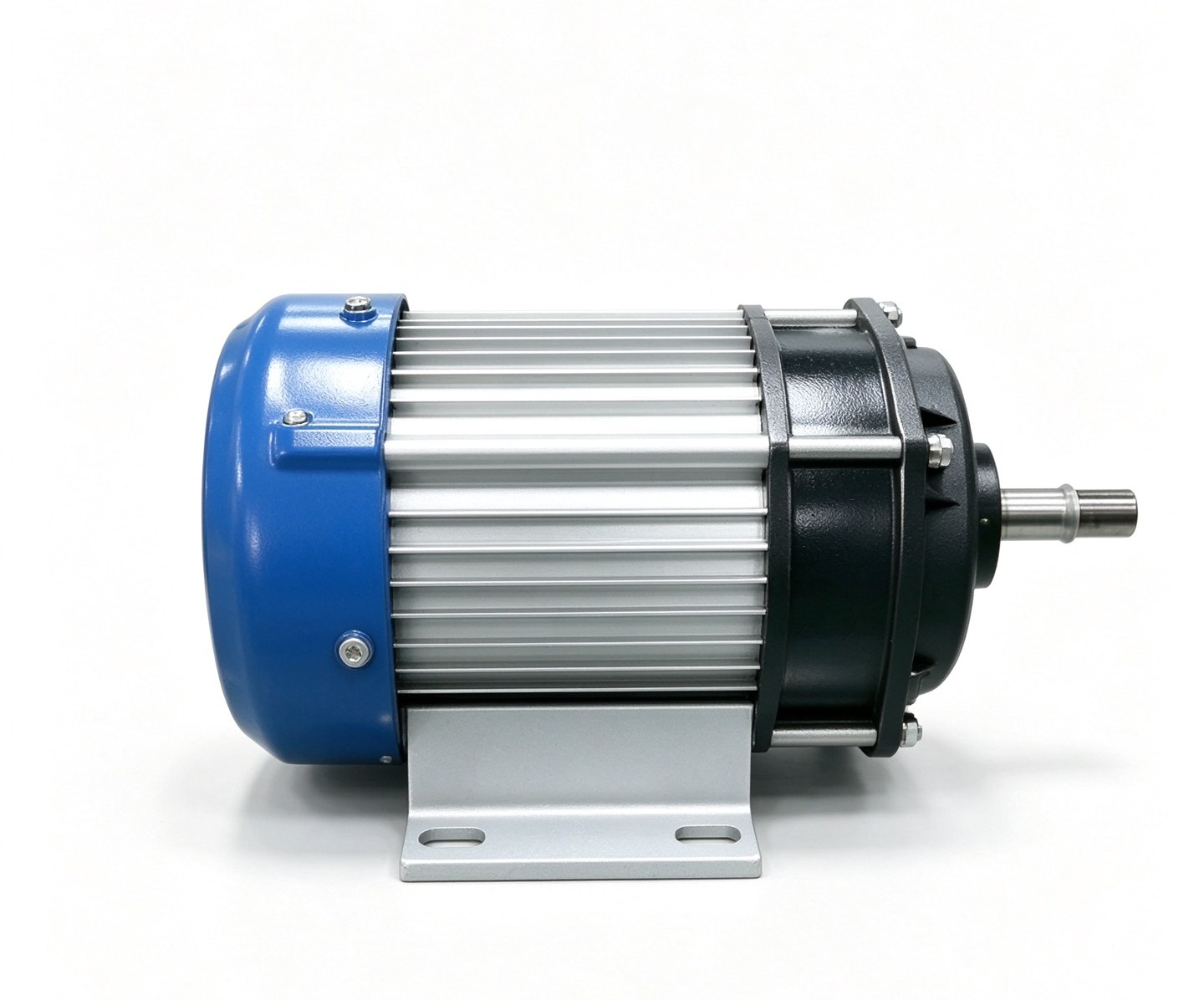
Description
| Environmental Conditons | —20℃~50℃ | Number of Phases | / |
| Rotation Direction | CW/CCW | Insulation Class | B-H |
| Noise | ≤65dB | Protection Class | IP40 |
| Work Condition | S1 |
Advantages
01High Efficiency
Due to the brushless design that eliminates frictional losses between the brushes and the commutator, BLDC motors are generally more efficient than brushed motors, especially under high load conditions.
02Low Maintenance
Since there are no brushes, BLDC motors do not need to be replaced regularly, reducing maintenance costs and time.
03High Reliability And Long Life
The brushless design reduces mechanical wear and improves the reliability and service life of the motor
04High Power Density
BLDC motors can provide high power output in a small volume, which is suitable for application scenarios where space is limited.
05Precise speed and position control
Due to the electronic commutation mode of BLDC motors, precise speed and position control can be realized, which is suitable for applications that require high-precision control.
06Quiet operation
The brushless motor operates with low noise because there is no frictional noise of the brushes and commutators.
07High speed
BLDC motor can achieve high speed, suitable for high-speed applications, such as power tools and high-speed rotating equipment.
08Better thermal management
The stator of brushless motors is usually surrounded by the rotor, which has a better heat dissipation effect and helps to improve the efficiency and life of the motor.
Motor Technical Data
| Model | Voltage | Rated Load | Body Length | ||||
| Power | Speed | Torque | Current | ||||
| V | W | rpm | N.m | A | L:mm | ||
| BLDC electric tricycle motor | 48 | 1000 | 480 | 21 | 28 | / | |
| 48 | 2000 | 432 | 21 | 28 | / | ||
Mechanical Dimensions
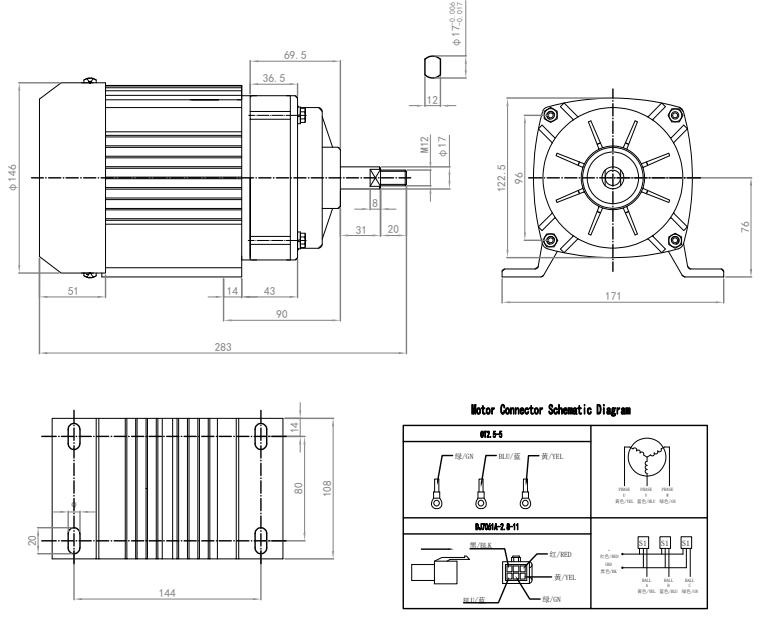
Customizable solutions
Application:
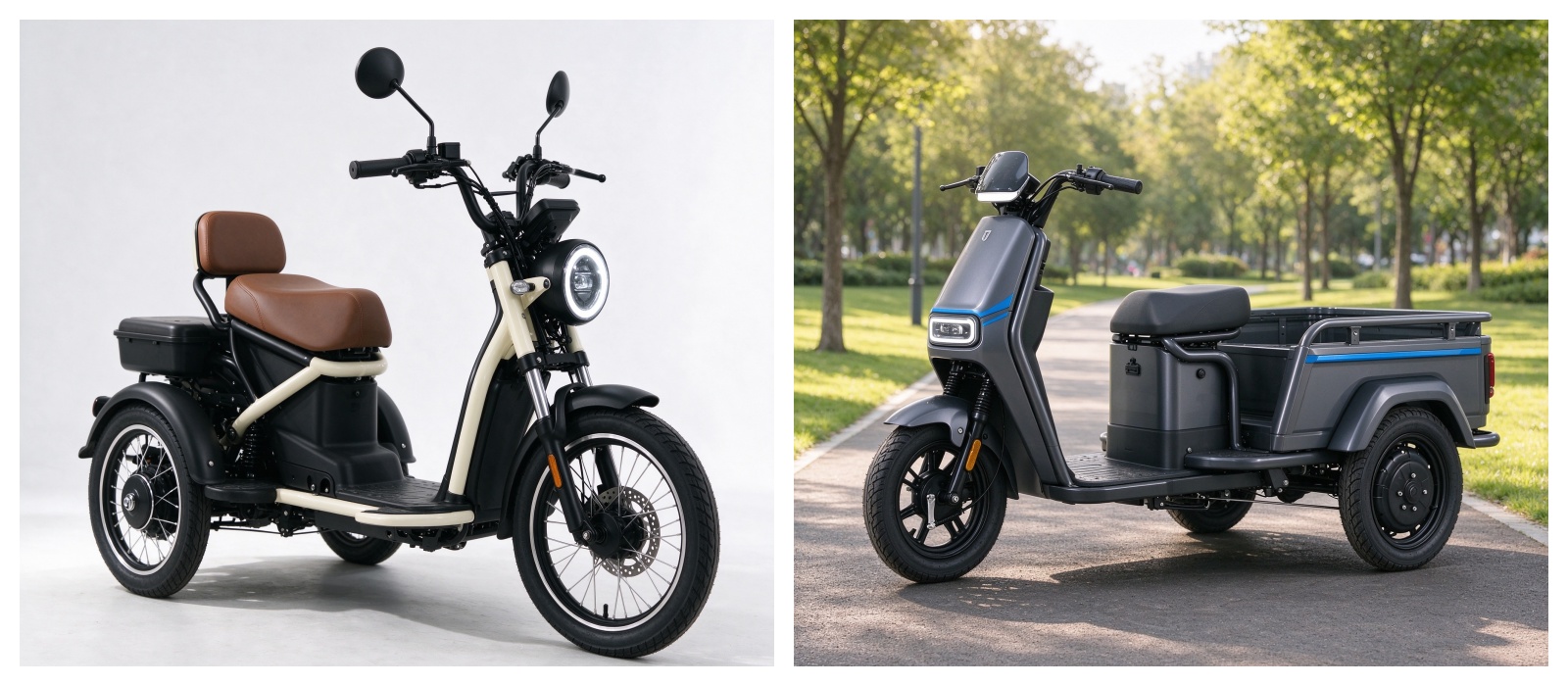
This product is a drive component for electric tricycles. It is installed on the vehicle's rear axle, drive wheels, or equipment transmission parts. It converts electrical energy into mechanical energy, outputting low-speed and high-torque rotational power to directly drive the wheels or working mechanisms for forward movement, lifting, and conveying.
Working Principle:
(1) Drive Section: The motor is a permanent magnet DC motor. The stator uses permanent magnets to establish a constant magnetic field. The rotor is either an iron core wound with armature windings (brushed model) or a rotor embedded with permanent magnets and equipped with three-phase windings (brushless model). DC current enters the armature windings through the carbon brush commutator (or electronic commutation by the controller). The current-carrying conductors generate torque under the action of electromagnetic force in the air gap magnetic field, driving the rotor to rotate at high speed.
(2) Reduction Section: The small gear at the rotor shaft end meshes with the large gear in the gearbox, transmitting power through one or multiple stages of cylindrical gears, planetary gears, or worm gears.
Functions:
(1) Power Output Function: Converts DC electrical energy into rotational mechanical energy to drive the vehicle or mechanism. It features forward and reverse operation (by changing the current direction or controller commutation) and stepless speed regulation.
(2) Speed Reduction and Torque Multiplication Function: Through the gearbox, the motor's high speed and low torque are converted into low speed and high torque. This enables the entire machine to have starting and climbing capabilities under load conditions, eliminating the need for external independent reduction devices such as belts or chains.
Parts

Applications
Motor Selection Details
01Application requirements:
Specific application scenarios (e.g., industrial robots, drones, power tools, AGVs, medical equipment, etc.)
Required operating environment (e.g., temperature range, humidity, dust and water resistance, etc.)
02Motor Specifications:
Rated voltage and currentRated power and peak poweSpeed range (RPM, rpm)Torque requirements (rated torque and maximum torque)Efficiency requirements
03
Dimensions & Weight:
Dimensions (diameter, length, etc.)Weight Limit
04Control Requirements
Control type (e.g. open-loop control, closed-loop control)、Type of sensor required (e.g. Hall sensor, encoder)
05Connection & Installation:
Type and size of shaft、Installation method (flange mounting, base mounting, etc.Wiring method and connector type
06Power requirements
Power supply type (DC power, battery, AC power, etc.)Rated voltage range and allowable voltage fluctuations
07Environmental conditions:
Ingress protection (e.g. IP rating)、Operating temperature range、Operating temperature range、Operating temperature range
08Other special requirements:
Noise level (for noise-sensitive applications, choose a low-noise, low-vibration motor)
Electromagnetic Compatibility (EMC)、Lifetime and reliability requirements