SEARCH
Modern lawn mowers have made grass cutting easier than ever. What was once a tiring manual task is now faster, quieter, and more convenient thanks to electric and robotic designs. Features like automatic driving, low-noise operation, and smart controls allow users to maintain a clean lawn with minimal effort. This convenience reflects the growing demand for outdoor equipment that saves both time and labor.
The core working principle of the lawn mower is that the motor drives the blade to rotate to complete the cutting of grass. It mainly contains two power parts: the driving system and the cutting system, which are used to match the intelligent control system to work together.
The evolution of lawn mowers shows how technology has improved everyday tools. Early models depended on manual pushing, while gasoline mowers increased power but created noise and emissions. Today, electric and robotic lawn mowers offer cleaner, quieter, and smarter solutions. This progress not only improves user experience but also highlights the important role of efficient motor technology in modern outdoor equipment.
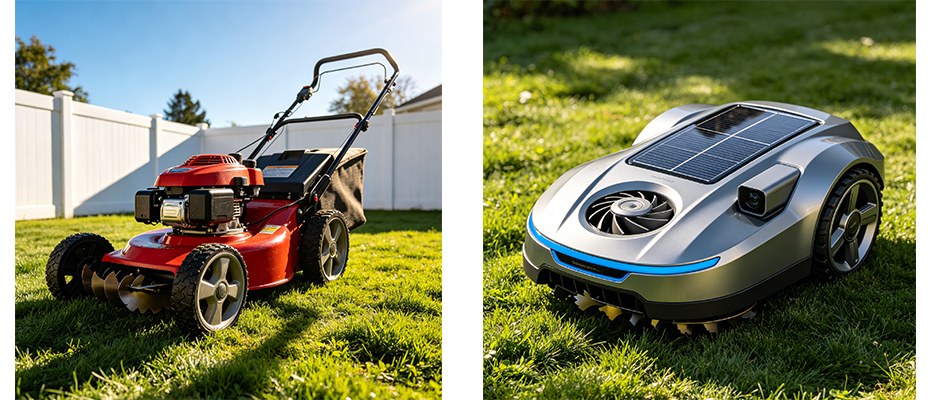
Lawn mowers have evolved into a wide range of types, but they can generally be divided into traditional lawn mowers and modern robotic lawn mowers.
Traditional lawn mowers include manual push mowers, gasoline mowers, and electric walk-behind mowers. These machines rely on direct user operation to control movement and cutting, offering reliable performance for basic lawn care. They are widely used because of their simple structure and strong cutting power, especially for medium and large grass areas.
Modern robotic lawn mowers represent a new generation of intelligent lawn care equipment. Unlike traditional models, robotic mowers can move automatically, detect obstacles, follow planned routes, and even return to charging stations without manual assistance. Their convenience, low noise, and smart operation make them increasingly popular in residential and commercial applications. This shift from manual operation to intelligent automation reflects how lawn mower technology is moving toward greater efficiency, user convenience, and smarter motor-driven solutions.

Modern smart lawn mowers are designed for a variety of environments where efficient, low-noise, and automated lawn maintenance is needed.
Smart lawn mowers are ideal for home gardens and private lawns.
They can mow automatically on schedule, helping homeowners keep their lawns neat without manual effort.
Their low noise and easy operation make them especially suitable for daily household use.
In public gardens and landscaped green areas, smart lawn mowers improve mowing efficiency over large spaces.
They reduce manual labor while ensuring consistent and even grass cutting, making landscape maintenance easier and more cost-effective.
Places such as hotels, office parks, and resorts need well-maintained lawns to create a professional appearance.
Smart lawn mowers provide reliable and continuous operation, helping maintain attractive outdoor spaces with minimal labor.
Schools, residential communities, and public institutions often have wide lawn areas requiring regular maintenance.
Smart mowers can operate automatically, reducing maintenance workload and improving efficiency in these shared spaces.
For premium landscaping projects, robotic lawn mowers add value through smart automation and precise mowing performance.
Their advanced features make them an important part of modern intelligent outdoor equipment solutions.
As lawn care technology advances, traditional robotic lawn mowers are being upgraded into new smart robotic lawn mowers with better automation, efficiency, and user experience. Here are the main differences:

Traditional robotic lawn mowers usually rely on boundary wires to define the mowing area. Installation is more complex, and the mower follows relatively simple routes.
New smart robotic lawn mowers use technologies such as GPS, sensors, and intelligent path planning, allowing more flexible navigation and higher mowing accuracy without depending heavily on boundary wires.
Traditional models have limited sensing ability and may only stop or change direction after touching an obstacle.
New smart models are equipped with advanced sensors and obstacle detection systems, enabling them to recognize and avoid obstacles in real time, improving both safety and efficiency.
Traditional robotic mowers often use random movement patterns, which can reduce mowing efficiency and increase working time.
Modern smart robotic mowers optimize mowing routes automatically, ensuring faster coverage, less repeated movement, and better energy efficiency.
Traditional robotic mowers usually offer basic button controls with limited settings.
New versions support mobile app control, scheduling, remote monitoring, and intelligent management, giving users a much more convenient operating experience.
Traditional models can return to charging stations, but with limited charging management functions.
New smart robotic lawn mowers feature automatic charging optimization, better battery management, and more efficient energy use for longer operation.

Traditional robotic mowers provide basic mowing functionality but may have less stable operation and higher noise levels.
New smart models are designed with improved motor systems, delivering lower noise, smoother performance, and more reliable mowing quality.
Traditional robotic mowers are mainly suitable for simple and small lawn areas.
New smart robotic lawn mowers can adapt to complex lawns, larger green spaces, and commercial landscaping applications, making them suitable for a wider range of environments.
Traditional robotic lawn mowers focus on replacing manual labor.
New smart robotic mowers not only automate mowing but also improve precision, intelligence, and energy efficiency, representing the future direction of lawn care equipment.
Compared with traditional lawn mowers, modern smart robotic lawn mowers offer significant advantages in environmental performance, efficiency, user experience, and product design. These improvements are transforming lawn care into a smarter and more sustainable solution.
Modern smart lawn mowers are powered by rechargeable batteries instead of gasoline engines.
This means zero exhaust emissions, making them cleaner and more environmentally friendly.
As global demand for green equipment grows, battery-powered mowing systems are becoming the preferred solution for sustainable lawn maintenance.
Traditional fuel-powered lawn mowers often produce loud engine noise that can disturb nearby environments.
Smart robotic lawn mowers use efficient electric motors, allowing them to operate with much lower noise levels, making them ideal for:
Residential neighborhoods
Garden
Hotels
Office parks
Low-noise operation improves user comfort and allows mowing at flexible times without causing disturbance.
Modern robotic lawn mowers use intelligent route planning and automatic operation, greatly improving mowing efficiency.
They can:
Work automatically on schedule
Reduce repeated mowing paths
Maintain consistent cutting quality
This reduces manual labor while delivering more efficient lawn maintenance.
Gasoline mowers require regular maintenance such as:
Refueling
Oil change
Engine servicing
Battery-powered robotic lawn mowers have a simpler structure and require less maintenance, helping users save both time and operating costs.
Modern smart mowers offer advanced intelligent features such as:
Automatic charging
Obstacle detection
Remote app control
Scheduled mowing
These functions create a much easier and more convenient mowing experience, allowing users to achieve hands-free lawn care.
Modern robotic lawn mowers are designed with a clean, compact, and modern appearance, matching the aesthetic demands of smart homes and intelligent outdoor equipment.
Compared with traditional bulky machines, their modern design offers:
Improved visual appeal
Compact structure
Better integration with smart outdoor environments
This modern aesthetic increases both product value and user preference
Brushless DC motors are one of the most important motor types in modern robotic lawn mowers.
They offer major advantages such as: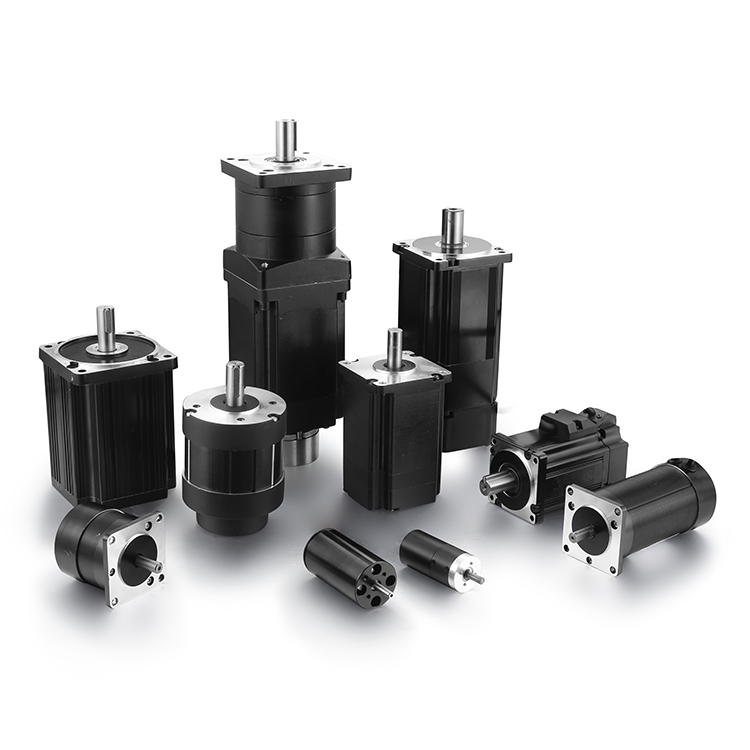
High efficiency
Low noise
Long service life
Low maintenance
Because there are no brushes, friction loss is reduced, which improves efficiency and reliability.
This makes BLDC motors ideal for both blade cutting systems and drive wheel systems.
Their stable performance also helps robotic lawn mowers achieve smoother operation and longer battery life.
Planetary gear motors are commonly used in the wheel drive system of robotic lawn mowers.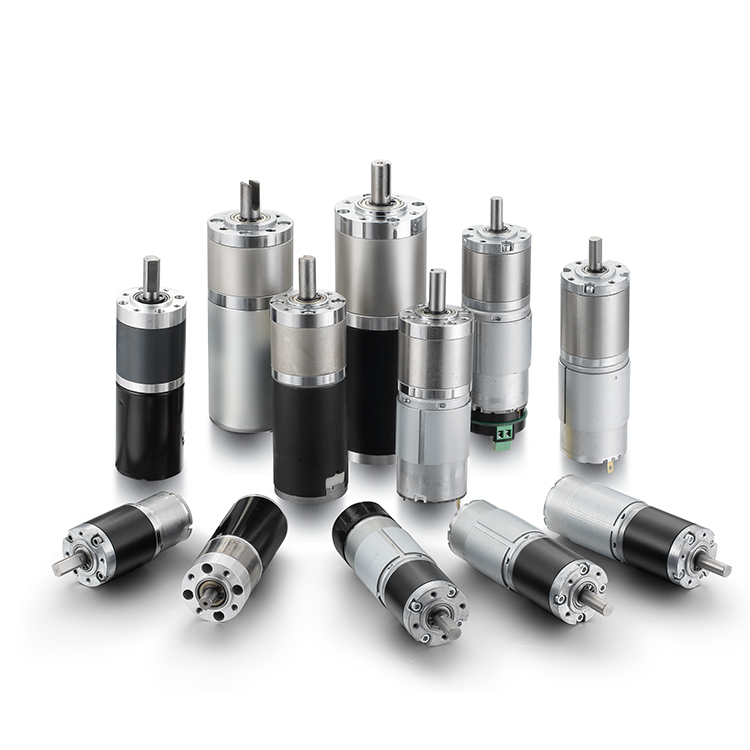
Their main advantages include:
High torque output
Compact size
Stable transmission
High load capacity
Robotic lawn mowers need strong torque when moving on grass, slopes, or uneven terrain.
Planetary gear motors increase torque while maintaining a compact structure, making them suitable for efficient wheel driving.
Outer rotor brushless motors are widely used in blade drive applications.
They provide:
Higher torque density
Smooth operation
Compact design
Because the rotor rotates on the outside, the motor can generate larger torque at lower speed, which is helpful for driving cutting blades smoothly and efficiently.
This motor type is especially useful when compact size and strong cutting performance are required.
Hub motors integrate the motor directly into the wheel assembly.
Their advantages include:
Compact integration
Space saving
Direct drive efficiency
By reducing transmission components, hub motors simplify the structure of robotic lawn mowers and improve system efficiency.
This design is beneficial for modern mowers that require compact layouts.
The cutting blade system often uses high-speed motors to ensure efficient grass cutting.
These motors provide:
High rotational speed
Stable cutting performance
Fast blade response
A high-speed motor ensures the blade rotates smoothly and cuts grass evenly, which directly affects mowing quality.
For this reason, motor stability and efficiency are essential in blade drive applications.
BG Motor offers flexible and in-depth customization to meet different industrial applications.
Customizable parameters include:
Voltage range: Low / medium / high voltage configurations available
Power output: From micro precision motors to medium–high power systems
Shaft design: Diameter, length, and structure (D-shaft, round shaft, spline shaft, etc.)
Lead wire options: Customized length, direction, and protection level (waterproof / heat-resistant)
Labeling & branding: OEM / ODM private labeling support
Suitable for drones, industrial automation, robotics, and smart equipment industries.
With advanced manufacturing infrastructure, BG Motor ensures efficient and reliable delivery performance.
Key advantages:
Equipped with two modern manufacturing factories
Multiple automated production lines operating in paralle
Standardized and modular production system
Delivery efficiency:
Standard products: fast stock availability
Customized orders: delivery as fast as 15 days
Helps customers significantly shorten project development cycles and accelerate time-to-market.
BG Motor is backed by decades of manufacturing expertise and strong technical support.
Company foundation:
30+ years of motor manufacturing experience
Experienced R&D engineers and technical specialists
After-sales support:
Fast response to technical issues
Application troubleshooting and optimization support
Assistance in product upgrade and secondary development
Quality control:
Full-process quality inspection system
Strict performance testing before shipment
Continuous product performance monitoring
Ensures stable and reliable operation throughout the product lifecycle.
BG Motor focuses not only on manufacturing, but also on delivering optimized system-level solutions.
Core capabilities:
Application-based structural optimization design
Balanced engineering between performance and cost
Multiple solution options (economy / standard / high-performance versions)
Customer value:
Reduced overall BOM cost
Eliminated unnecessary performance redundancy
Improved product market competitiveness
Helps customers achieve the best balance between cost efficiency and performance stability.
 BACK
BACK
As a “barometer” of China's foreign trade, the 139th Canton Fair (April 2026…
The 2nd Advanced Motor Materials Innovation Forum has officially opened, as indu…
Global Electric Motor Industry UpdateRecently, the global electric motor industr…
BG Motor Resumes Full Production – February 24, 2026BG Motor has officially resu…
Chinese New Year Holiday Notice (2026)Dear Valued Customers and Partners,To cele…
With the continuous upgrading of global manufacturing, the rapid growth of new e…