SEARCH
Small automation equipment is becoming increasingly common in compact production lines, laboratory instruments, smart home devices, packaging systems, and precision handling equipment. Although these machines often have limited installation space, they must still deliver reliable motion, accurate speed control, sufficient torque, and consistent performance throughout repeated operating cycles.
The DC motor is a key component in achieving these goals. An unsuitable motor may cause insufficient starting torque, excessive noise, overheating, unstable speed, or premature wear, while a properly matched motor can improve operating efficiency, simplify mechanical design, and extend the service life of the entire system.
For equipment engineers, motor selection should therefore go beyond rated power. Voltage, speed, torque, duty cycle, installation space, noise requirements, and control methods must all be considered alongside the characteristics of the driven load.
Brushed DC motors feature a relatively simple structure, straightforward control, and a competitive initial cost, making them suitable for small automation equipment where the control system does not require advanced speed regulation or an exceptionally long maintenance interval.
Typical applications include small pumps, compact actuators, simple feeding mechanisms, and low-cost automatic devices. Their speed can be adjusted relatively easily by varying the supplied voltage or using PWM control, depending on the system design.
However, brushes and commutators are subject to mechanical wear, which can increase maintenance requirements over time. For equipment that operates continuously, requires very low noise, or must minimize scheduled maintenance, a brushless alternative may be more appropriate.
Best suited for: Cost-sensitive equipment, intermittent operation, and mechanisms with relatively simple control requirements.
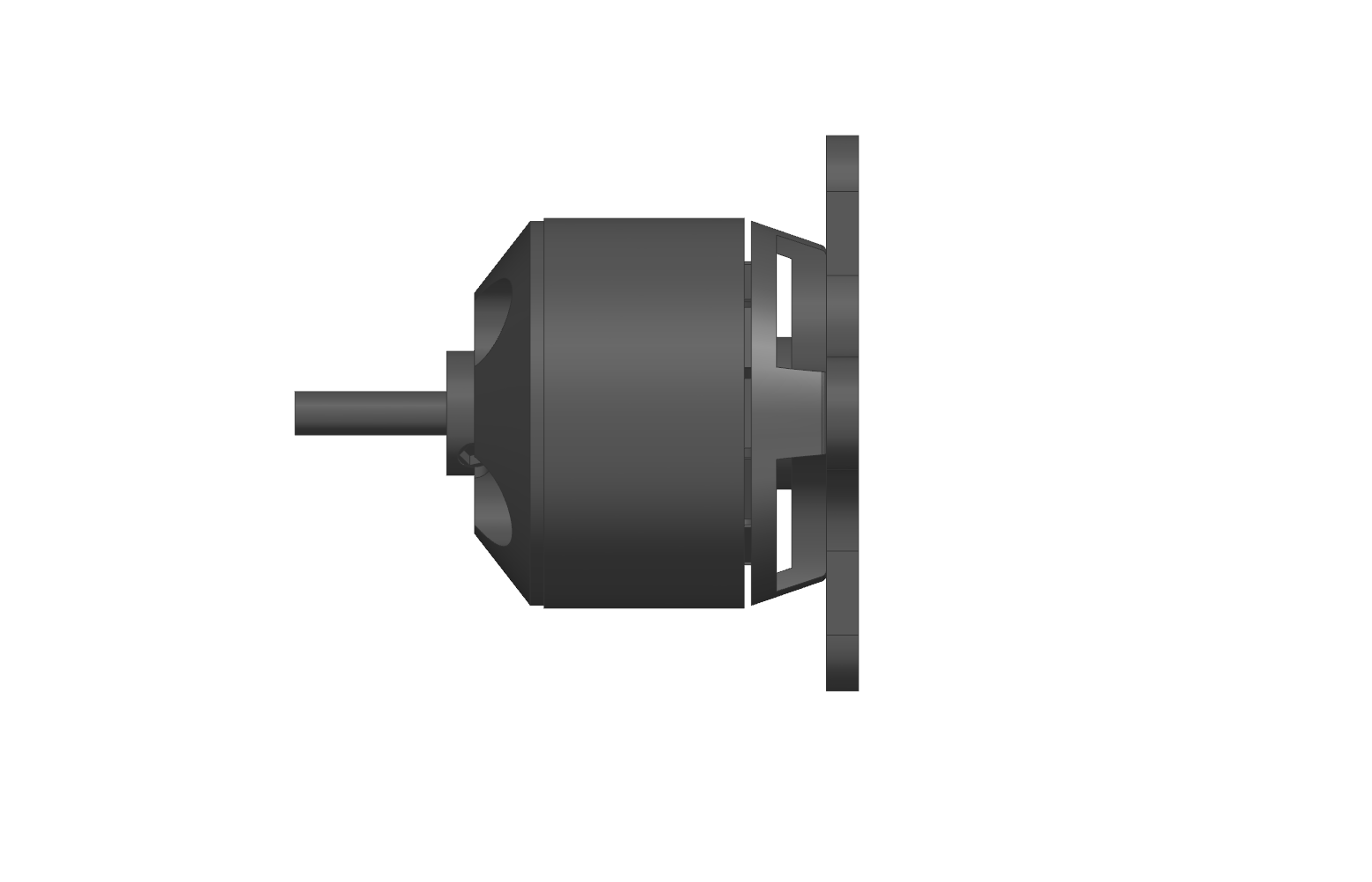
Brushless DC motors replace mechanical commutation with electronic control, eliminating brush wear and making them well suited to applications that require longer service life, reduced maintenance, and stable operation. Depending on the motor design and control system, BLDC motors can also provide high operating efficiency, a broad speed range, and lower mechanical noise.
These characteristics make them attractive for compact conveyors, automated inspection equipment, small robotic systems, precision instruments, and other devices that operate frequently or for extended periods. When paired with a suitable controller, a BLDC motor can support more refined speed regulation and dynamic response than many basic motor configurations.
Nevertheless, overall performance depends on more than the motor itself. Controller compatibility, cooling conditions, load characteristics, and operating speed all influence efficiency and temperature rise. Engineers should evaluate the motor and its electronic drive as a complete system rather than selecting a motor based only on its rated speed or power.
Best suited for: Equipment requiring frequent operation, low maintenance, efficient motion, and more precise speed control.
When small automation equipment must move a load, lift a component, or drive a mechanism at low speed, a standard DC motor may not provide sufficient output torque directly. A planetary gearbox can reduce output speed while increasing torque, allowing the drive system to deliver greater mechanical force without requiring an oversized motor.
Planetary geared DC motors are particularly useful in compact robotic mechanisms, automated positioning systems, material handling devices, electric actuators, and small conveyor drives. Their coaxial arrangement also supports a compact installation layout, which is valuable when space is limited.
When selecting a planetary geared motor, engineers should consider the required output torque, target speed, gearbox ratio, starting load, and duty cycle. It is also important to distinguish between peak torque and continuous operating torque, because a motor-gearbox combination must withstand the actual load throughout its intended operating cycle.
Best suited for: Compact equipment requiring higher output torque, controlled low-speed movement, or a space-efficient transmission system.
DC worm geared motors combine a DC motor with a worm gearbox to achieve substantial speed reduction and high output torque in a compact arrangement. They are useful when equipment requires controlled, slower movement rather than high rotational speed, such as in selected lifting mechanisms, adjustable platforms, positioning systems, and automated opening or closing devices.
Depending on the gearbox design and transmission ratio, worm gearing may also offer resistance to back-driving. However, self-locking should never be assumed solely because a worm gearbox is used; it must be verified under the actual load, lubrication, wear, and operating conditions. Where a suspended load or personnel safety is involved, a suitable mechanical brake or independent load-holding mechanism may be necessary.
Worm geared motors also require attention to transmission efficiency and heat generation, particularly under sustained loads. Correct gearbox sizing and an appropriate duty cycle help balance torque output, temperature rise, and long-term reliability.
Best suited for: Low-speed mechanisms, compact drive systems requiring substantial torque, and applications where the gearbox's back-driving characteristics can be appropriately verified.
The most suitable motor depends on the movement the equipment must perform and the conditions under which it operates. The following guide provides a starting point for preliminary selection.
| Equipment requirement | Motor type to consider | Main advantage |
|---|---|---|
| Low initial cost and simple control | Brushed DC motor | Simple structure and accessible control |
| Frequent operation and reduced maintenance | BLDC motor | No brush wear and potentially high efficiency |
| High torque with limited installation space | DC planetary geared motor | Compact transmission with increased output torque |
| Low-speed operation with substantial torque | DC worm geared motor | High reduction ratios in a compact arrangement |
Before confirming a model, engineers should calculate the required torque and speed at the output shaft, check starting and acceleration loads, and verify the motor's voltage, current, temperature rise, mounting dimensions, and duty cycle. If the equipment experiences frequent starts and stops, sudden load changes, or continuous operation, these factors can be just as important as rated power.
For applications with strict noise, positioning, or speed-stability requirements, the motor should also be evaluated together with its controller, gearbox, mounting structure, and load. A well-matched drive system is generally more effective than selecting a higher-power motor without considering the complete application.
Improving the performance of small automation equipment does not necessarily mean choosing a larger or more powerful motor. The real objective is to match the motor's electrical and mechanical characteristics to the equipment's operating requirements.
Brushed DC motors remain a practical option for cost-sensitive applications, while BLDC motors are attractive for efficient, low-maintenance operation. Planetary geared motors provide higher output torque in compact spaces, and worm geared motors can support low-speed, high-torque mechanisms when their efficiency and load-holding characteristics are properly assessed.
BG Motor offers a range of DC motors, brushless DC motors, and geared motor solutions for different equipment requirements. By evaluating operating speed, torque, installation space, duty cycle, and control needs, equipment developers can identify a more suitable drive configuration for their applications.
Explore BG Motor's product categories:
For customized applications, sharing the required voltage, output speed, torque, dimensions, and operating cycle with the BG Motor team can help narrow down the appropriate motor configuration.
 BACK
As a “barometer” of China's foreign trade, the 139th Canton Fair (April 2026…
The 2nd Advanced Motor Materials Innovation Forum has officially opened, as indu…
Global Electric Motor Industry UpdateRecently, the global electric motor industr…
BG Motor Resumes Full Production – February 24, 2026BG Motor has officially resu…
Chinese New Year Holiday Notice (2026)Dear Valued Customers and Partners,To cele…
With the continuous upgrading of global manufacturing, the rapid growth of new e…