SEARCH
Have you ever wondered what makes an electric standing desk rise with a single touch, or allows an adjustable bed to change position without physical effort? The movement looks effortless, but behind it is a drive system that must deliver sufficient force, maintain controlled speed, and operate reliably within a limited space.
For modern furniture manufacturers, the challenge is not simply making furniture move. The real task is to achieve smooth lifting, low operating noise, stable performance, and a long service life without making the product unnecessarily large or expensive.
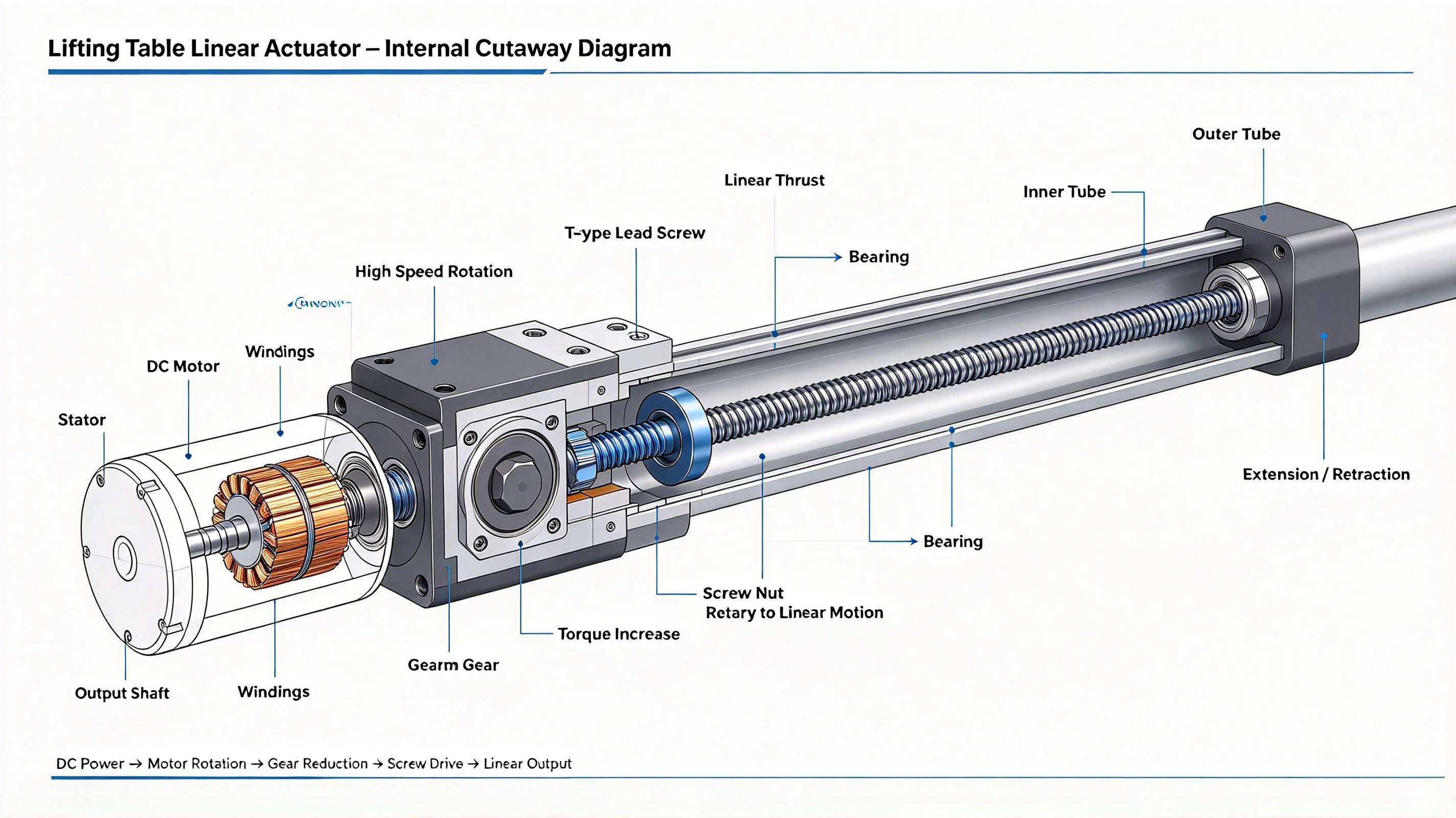
A geared motor plays an important role in this process. By combining an electric motor with a gearbox, it provides a practical balance between speed and torque. When connected to a lead screw or linear actuator, rotational motion is converted into the linear movement needed to raise a desk, adjust a bed, or extend a recliner.
The quality of the final movement therefore depends not only on the motor itself, but also on how well the motor, gearbox, and mechanical structure are matched.
Different furniture applications have different requirements for torque, speed, noise, control, and cost. Choosing the right motor starts with understanding these differences.
Brushed DC motors offer straightforward speed control and convenient integration with low-voltage DC power supplies. When paired with a suitable gearbox, they can provide the torque required for standing desks, recliners, and many home lifting mechanisms. Brush wear and maintenance requirements should be considered when frequent operation or extended service life is important.
BLDC motors eliminate mechanical brushes and can offer efficient operation, reduced brush-related maintenance, and flexible electronic control. They are worth considering for premium furniture, frequently operated lifting systems, and applications where long-term reliability is a priority. A compatible controller is required, and the complete drive system must be evaluated for noise, thermal performance, and cost.
AC induction motors may suit lifting equipment designed around an AC power supply. Their suitability depends on the required speed, control method, installation space, and operating cycle. For compact, low-voltage furniture actuators, DC motor solutions are often a more natural starting point.
Stepper motors are useful when repeatable incremental movement is needed, while servo motors provide feedback-based positioning and more advanced motion control. These technologies may suit specialized adjustable workstations or precision positioning equipment, although their additional control requirements and costs may not be necessary for conventional home furniture.
The key is to select the motor according to the application's actual torque, speed, control, and duty-cycle requirements—not simply its rated power.
A motor running at high speed does not necessarily provide the right output for lifting furniture. Many applications require relatively slow movement combined with sufficient torque to overcome the load.
A gearbox reduces rotational speed and increases available output torque, while the screw mechanism converts rotation into linear movement. Together, these components create a compact drive solution for lifting and positioning.
Two common screw options are:
Trapezoidal lead screws: Often suitable for cost-sensitive, intermittent lifting applications such as standing desks and recliners.
Ball screws: Offer higher transmission efficiency and can be considered for applications requiring more frequent movement or precise positioning, although their cost and integration requirements may be higher.
The screw mechanism affects the required motor torque, output speed, and overall efficiency. For this reason, motor selection should begin with the required lifting force and travel speed, followed by gearbox and screw matching.
It is also important to verify load-holding performance separately. Neither a gearbox nor a screw should automatically be assumed to prevent movement when power is removed.
Standard motors can meet many requirements, but furniture manufacturers often need specific dimensions, output speeds, and electrical configurations. Customization allows the drive system to fit the product rather than forcing the product to accommodate an unsuitable motor.
Key customization options include:
Motor type: Brushed DC, BLDC, or another suitable technology based on the application.
Voltage and power: Matched to the available power supply, lifting load, and operating cycle.
Output speed and gearbox ratio: Configured to balance lifting speed and available torque.
Shaft, mounting, and dimensions: Adapted to the actuator structure and available installation space.
Bearing arrangement: Selected according to shaft support, mechanical loads, and the overall transmission design.
Wiring and control compatibility: Matched to the equipment's controller and electrical connections.
For frequent lifting or sustained loading, thermal performance and duty cycle must also be evaluated. A motor that delivers sufficient torque for a short movement may not be suitable for repeated operation at the same load.
By defining these requirements early, OEM manufacturers can reduce prototype changes and improve integration efficiency.
BG Motor offers DC motors, BLDC motors, and geared motor solutions that can be evaluated for furniture and other compact automation applications.
Product page: https://www.china-bgmotor.com/product/Gears_Motor/Worm_Gear_Motor/638.html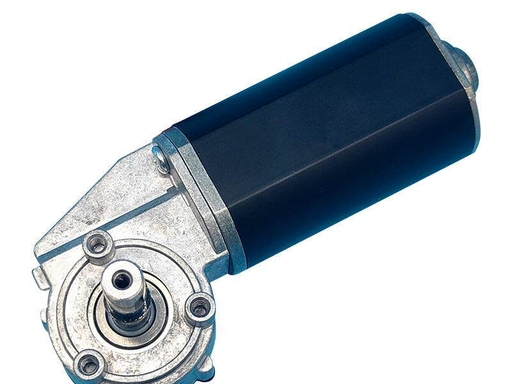
The BG63 worm gear motor is listed for sliding door and desk-lifting applications. Its published specification ranges include 12–110 VDC, 52–125 W, 45–120 rpm, and 2–6 N·m.
This model is a potential starting point for compact lifting mechanisms that require controlled output speed and increased torque. The appropriate configuration depends on the actual load, operating speed, duty cycle, and mechanical transmission design.
Product category: https://www.china-bgmotor.com/product/Gears_Motor/Worm_Gear_Motor/
The BG110ZYT128 is listed within BG Motor's worm gear motor range, with published specification ranges of 12–220 VDC, 180–600 W, 15–150 rpm, and 13–130 N·m.
Its higher-torque configurations may be worth evaluating for more demanding drive applications, provided that the required operating point falls within the available model specifications. Final selection should consider the complete lifting mechanism rather than load weight alone.
Explore the BG Motor geared motor range or contact BG Motor to discuss your project requirements.
For OEM furniture manufacturers, BG Motor can evaluate motor type, voltage, power, gearbox ratio, output speed, mounting dimensions, and other configuration requirements according to the application. The goal is to develop a drive solution that fits the equipment's performance targets and installation constraints.
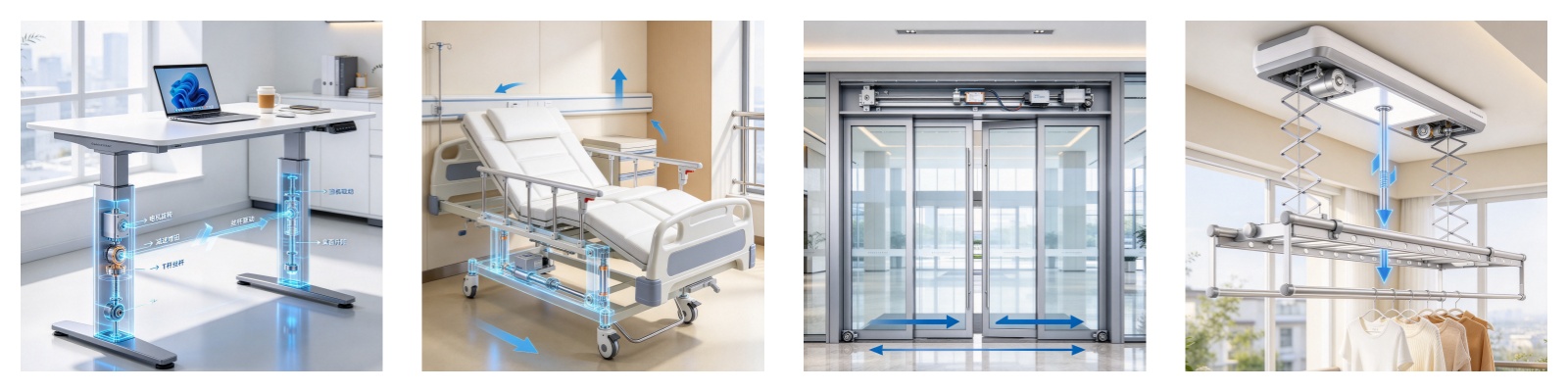
Electric standing desks: Require sufficient lifting force, controlled speed, and coordinated movement when multiple lifting columns are used.
Adjustable beds and recliners: Need compact drive systems that provide reliable movement, suitable torque, and acceptable operating noise.
Medical beds: May require frequent adjustment, higher reliability, and integration with system-level safety controls. Motor selection must be validated against the requirements of the complete medical device.
Automated workstations: May require customized motor dimensions, repeatable positioning, or specific speed and torque combinations.
Each application places different demands on the drive system, which is why selecting a motor based on real operating conditions is more effective than choosing one based on power rating alone.
From adjustable desks to electric beds, modern furniture relies on a carefully matched drive system to turn a simple button press into controlled mechanical movement.
The right motor provides the required power, the gearbox balances torque and speed, and the screw mechanism converts rotation into linear motion. When standard products cannot meet the application's requirements, a customized geared motor can help address specific needs for voltage, output speed, dimensions, and installation.
At BG Motor, we focus on matching motor performance to real application requirements, helping equipment manufacturers develop compact, reliable, and practical drive solutions.
Developing an electric lifting product? Contact BG Motor to discuss a suitable motor or geared motor configuration for your project.
 BACK
As a “barometer” of China's foreign trade, the 139th Canton Fair (April 2026…
The 2nd Advanced Motor Materials Innovation Forum has officially opened, as indu…
Global Electric Motor Industry UpdateRecently, the global electric motor industr…
BG Motor Resumes Full Production – February 24, 2026BG Motor has officially resu…
Chinese New Year Holiday Notice (2026)Dear Valued Customers and Partners,To cele…
With the continuous upgrading of global manufacturing, the rapid growth of new e…