SEARCH
When you are selecting an outrunner motor for a UAV, comparing only the motor brand or KV value is not enough. You need to consider the stator size, KV, battery voltage, propeller size, thrust, motor weight, power, and actual flight requirements together.
This article compares DJI and T-Motor as market references and then explains where BG & BGS outrunner motors can be matched or used as alternative solutions.
Important: The BG Motor models below are based on the current product data provided by BG Motor. A “match” means a technical reference or replacement direction, not a guaranteed drop-in replacement. Final replacement requires checking the propeller, battery, ESC, mounting dimensions, shaft, thrust and flight controller parameters.
DJI has established widely recognized propulsion systems for consumer and professional UAVs. For example, DJI's Snail system uses a 23×5 mm stator, 2400 KV motor and 5-inch propellers, making it a clear reference for high-speed FPV and racing applications.
DJI's E305 system uses a 23×12 mm stator, 800 KV motor and 9.4×5-inch propeller, showing another design direction for larger multirotor platforms.
T-Motor covers a much wider range of UAV propulsion systems. Its current FPV range includes motors such as the F1404 for 2.5–4-inch FPV builds, F2203.5 for 3–6-inch applications, and F40 Pro V 2306.8 for 5-inch racing drones.
For you as a UAV manufacturer or propulsion-system developer, these products can therefore be used as benchmark references rather than simply as brand comparisons.
Small FPV drones normally require:
For example, T-Motor's F1404 is designed for 2.5–4-inch FPV drones, with 2900 KV, 3800 KV and 4600 KV versions. Its motor weight is only about 9.34 g.
T-Motor's F2203.5 covers another common FPV range. The manufacturer specifies 1500 KV for 5-inch long-range applications, while 2850 KV and 3550 KV versions are aimed at smaller 3-inch applications.
For 5-inch racing, the F40 Pro V 2306.8 is offered in 1950 KV and 2150 KV versions and is specifically matched to 5-inch frames.
BG Motor's supplied product data currently lists three main outrunner families:
| BG Motor Series | Available KV | Voltage Examples | Typical Position |
|---|---|---|---|
| BG 4014 | 340 / 400 KV | 18 V / 22.2 V | Medium UAV propulsion |
| BG 5060 | 200 / 280 KV | 24 V / 36 V / 48 V | Larger UAV propulsion |
| BG 7050 | 90 / 200 KV | 24 V / 36 V / 48 V | High-load UAV / larger propeller systems |
The BG 4014 series uses a 24-pole design, high-performance NdFeB magnets and offers customized voltage, electrical performance, shaft, flange, wiring and drive options.
This means BG's current standard outrunner range is not a direct one-to-one replacement for a 4-inch or 5-inch high-KV FPV motor such as a DJI Snail or T-Motor F40/F2203.5.
That distinction is important if you are selecting a replacement motor.
The BG 4014 is currently the closest BG standard series for smaller UAV propulsion among the three listed outrunner families.
Its available configurations include:
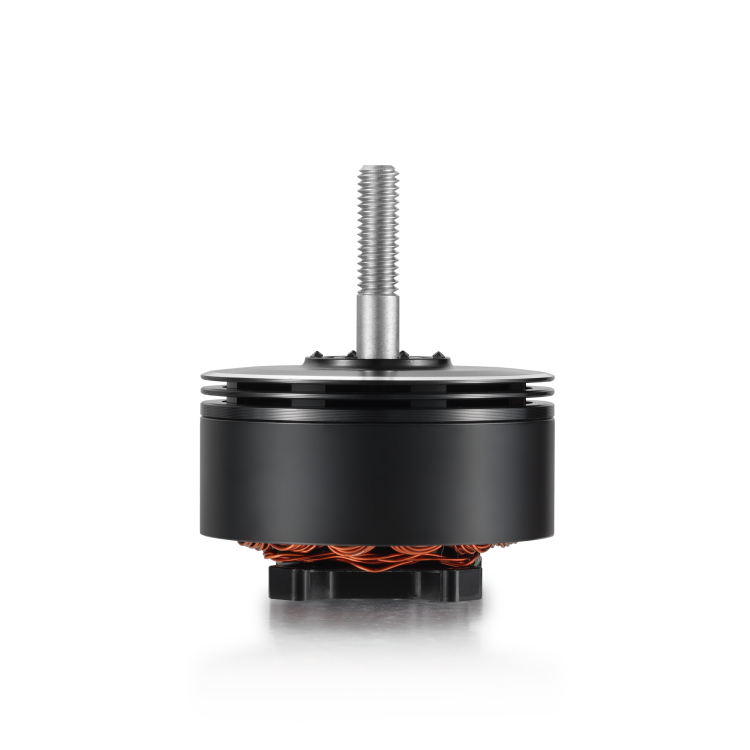
The rated speed is approximately 5,200–7,500 rpm depending on voltage and KV.
| Brand | Representative Motor | KV | Typical Propeller / Application |
|---|---|---|---|
| DJI | Snail | 2400 KV | 5-inch FPV / racing |
| T-Motor | F1404 | 2900–4600 KV | 2.5–4 inch FPV |
| T-Motor | F2203.5 | 1500–3550 KV | 3–6 inch FPV |
| T-Motor | F40 Pro V 2306.8 | 1950 / 2150 KV | 5-inch FPV racing |
| BG Motor | 4014 | 340 / 400 KV | Larger-propeller UAV applications |
So, if your project is a true 4-inch or 5-inch racing UAV, the current BG 4014 should not be presented as a direct equivalent to these high-KV FPV motors.
However, if your project uses a larger propeller, lower KV and higher efficiency, the BG 4014 becomes much more relevant.
The BG 5060 is designed for a different UAV class.
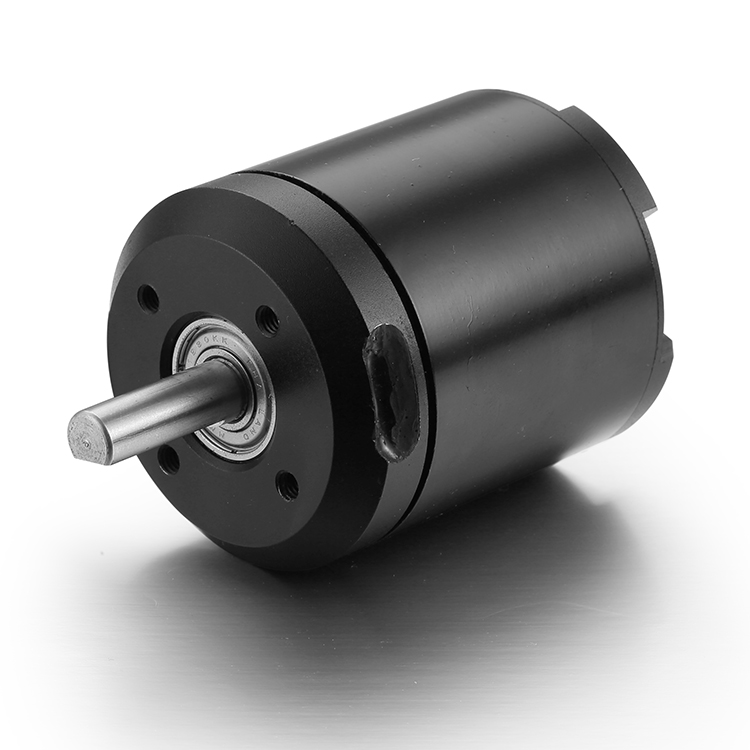
Current configurations include:
Compared with 4-inch and 5-inch FPV motors, the KV is much lower and the motor is physically larger.
This makes the 5060 more suitable for applications where you need:
T-Motor's current product range also shows this transition from high-KV FPV motors to larger low-KV propulsion systems. For example, T-Motor lists medium and industrial propulsion motors with KV values around 200–400 KV and larger propellers.
The BG 7050 is another step toward high-load propulsion.
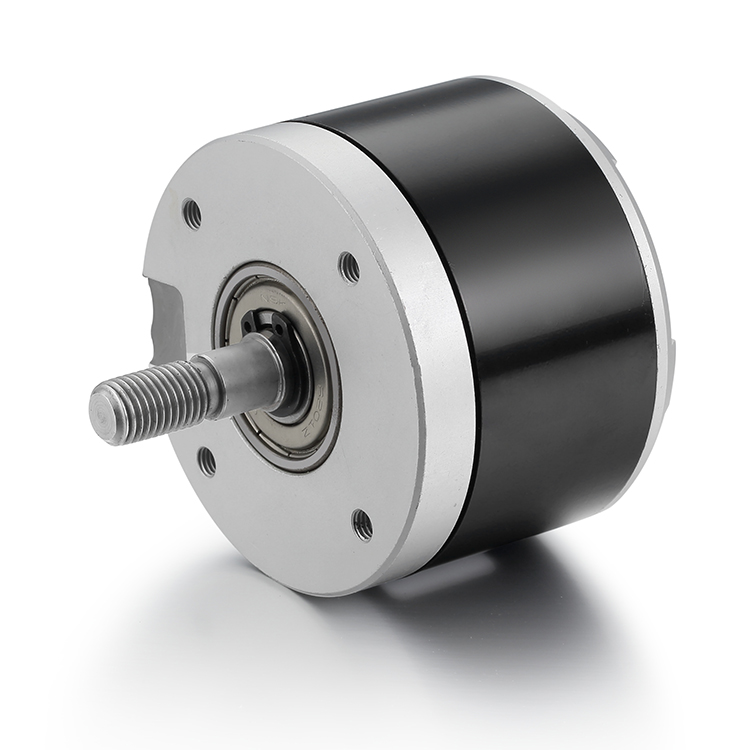
Available configurations include:
The 7050 is therefore not intended to compete directly with small FPV racing motors.
Instead, it can be considered when you are designing:
For comparison, DJI's agricultural platforms also use much larger low-KV motors. DJI T10 uses a 100×10 mm stator, 84 KV motor and 33×9-inch propeller, while the T30 uses a 100×18 mm stator and 77 KV motor with a 38×20-inch propeller.
This shows why KV should always be considered together with motor size and propeller size.
For customers who are already using T-Motor products, the following table can be used as a first-stage selection guide.
| T-Motor Reference | Main Application | BG/BGS Reference Direction | Replacement Status |
|---|---|---|---|
| F1404 | 2.5–4 inch FPV | No current standard direct equivalent | Custom development recommended |
| F2203.5 | 3–6 inch FPV | No current standard direct equivalent | Custom development recommended |
| F40 Pro V 2306.8 | 5-inch FPV racing | No current standard direct equivalent | Custom development recommended |
| V2207 / V2207.5 | 5-inch FPV | No current standard direct equivalent | Custom development recommended |
| MN4004 class | Small/medium aerial propulsion | BG 4014 | Application-dependent |
| Medium low-KV UAV motors | Medium UAV | BG 4014 / 5060 | Requires system verification |
| Larger low-KV UAV motors | Industrial UAV | BG 5060 / 7050 | Requires system verification |
| Agricultural / heavy-load propulsion | Large UAV | BG 7050 / customized BLDC | Application-dependent |
T-Motor's current product range confirms that the company separates its products into distinct FPV, cinematic, aerial photography and industrial propulsion categories rather than using one motor family for every UAV.
BG Motor can use the same system-level approach when developing a replacement.
Do not select the replacement based only on the original motor's KV.
Send BG Motor the following information:
1. Motor model
For example, DJI Snail, T-Motor F40, F2203.5, V2207, etc.
2. Battery voltage
3S, 4S, 6S, 8S, 12S, 14S, etc.
3. Propeller
Diameter, pitch and number of blades.
4. UAV weight
Including battery and payload.
5. Required thrust
Maximum thrust and normal operating thrust per motor.
6. Operating time
Short high-power operation or long-duration continuous operation.
7. Mechanical dimensions
Motor diameter, height, shaft diameter and mounting-hole pattern.
8. ESC/controller
Current limit, control method and communication requirements.
BG Motor can then adjust the motor design according to the application. Its supplied company information states that the R&D team can customize voltage, shaft, mounting flange, lead wires, temperature class and drive, while the BLDC customization range covers 5 W–20 kW and 20–100,000 rpm.
The biggest difference between a standard catalog replacement and a customized motor solution is that you do not have to keep exactly the same motor structure.
For example, if you are replacing a T-Motor motor, BG can evaluate:
Original motor → Battery → Propeller → Thrust → RPM → Power → ESC → Mechanical installation
and then design the replacement around your actual system.
The customization can include:
This is especially useful when your goal is not simply to buy another motor, but to replace an existing motor while keeping your UAV structure and performance requirements as close as possible.
You can use the following simple logic:
2.5–4 inch FPV → High KV → Small lightweight motor → Custom BG/BGS development
5 inch racing FPV → Approximately 1,500–2,500 KV → 4S/6S → Custom BG/BGS development
Medium UAV → Lower KV + larger propeller → BG 4014
Larger UAV → Low KV + higher load → BG 5060
Heavy-load / industrial UAV → Very low KV + large propeller → BG 7050 or customized motor
This is also why a motor with a similar KV is not automatically a suitable replacement. T-Motor's own selection guidance notes that KV alone does not determine performance; propeller size, battery voltage, aircraft weight and thrust must be considered together.
DJI and T-Motor provide useful benchmarks across different UAV propulsion categories, from small FPV racing motors to large industrial propulsion systems.
For 4-inch and 5-inch FPV drones, the current BG Motor standard outrunner catalog does not contain a direct equivalent to DJI Snail, T-Motor F1404, F2203.5 or F40 Pro V. A customized BG/BGS motor would be the more technically appropriate replacement route.
For medium and larger UAVs, BG's 4014, 5060 and 7050 series provide a clearer matching direction, with different KV and voltage configurations for different propulsion requirements.
The key is not to ask, “Which motor has the same KV?”
Instead, ask:
“Which motor can provide the required thrust, RPM, power, efficiency and mechanical fit with my propeller, battery and UAV?”
That is the basis for a reliable DJI or T-Motor replacement solution.
BG Motor can evaluate your existing DJI or T-Motor motor and develop a customized BG/BGS outrunner solution according to your UAV application.
 BACK
BACK
As a “barometer” of China's foreign trade, the 139th Canton Fair (April 2026…
The 2nd Advanced Motor Materials Innovation Forum has officially opened, as indu…
Global Electric Motor Industry UpdateRecently, the global electric motor industr…
BG Motor Resumes Full Production – February 24, 2026BG Motor has officially resu…
Chinese New Year Holiday Notice (2026)Dear Valued Customers and Partners,To cele…
With the continuous upgrading of global manufacturing, the rapid growth of new e…