SEARCH
Drone motors are the core power source of every UAV system. Whether used in FPV racing drones, aerial photography drones, agricultural UAVs, or industrial inspection platforms, the motor directly affects thrust, flight stability, speed response, efficiency, and service life. As drone technology develops toward longer endurance and smarter autonomous control, choosing the correct drone electric motor has become increasingly important for manufacturers and engineers.
Today, drones mainly use two types of motors: brushed motors and brushless motors. Brushless drone motors use electronic commutation through an ESC, providing higher efficiency, lower heat generation, faster response, and longer lifespan. In comparison, brushed motors rely on carbon brushes and mechanical commutators, offering a simpler and lower-cost structure but producing more friction and wear during operation. Because of these differences, brushless motors have become the mainstream solution for most modern UAV systems.
Although brushless motors dominate the professional drone market, brushed motors still remain useful in small toy drones and entry-level UAV products. Understanding the differences between these two motor types helps engineers and drone manufacturers select the most suitable UAV motor solution for different flight applications.
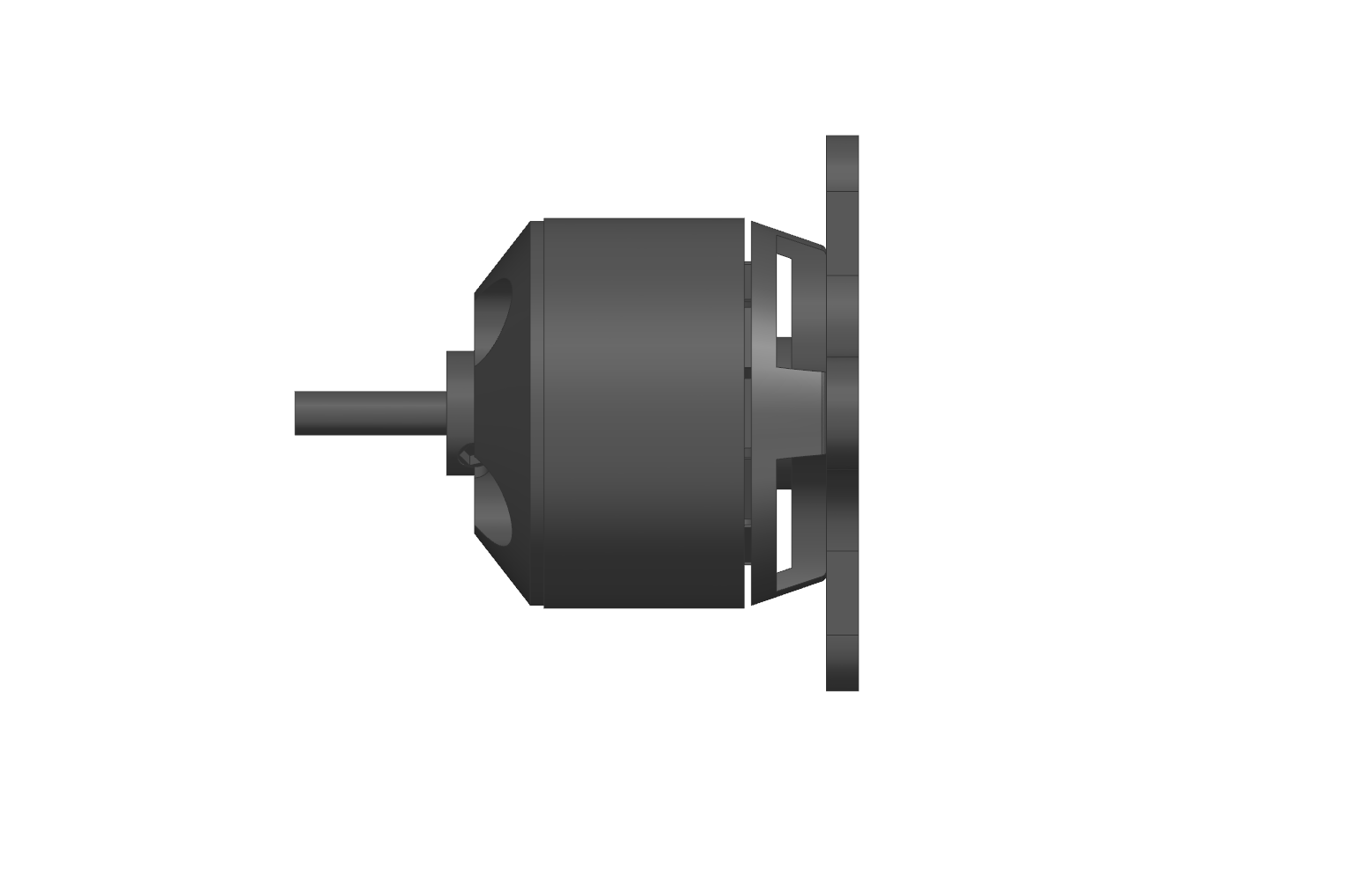
A brushless motor is a high-efficiency electric motor that uses electronic control instead of physical brushes to drive rotation. The motor works together with an Electronic Speed Controller (ESC), which continuously changes the current direction inside the stator winding to create a rotating magnetic field.
Because there are no brushes touching the commutator, brushless drone motors generate less friction and heat during operation. This allows the motor to achieve:
Brushless motors are widely used in:
Most modern UAV motors use an outrunner brushless design because it provides high torque while maintaining lightweight construction.
A brushed motor is a traditional DC motor that uses carbon brushes and a commutator to transfer electrical current to the rotor. As the rotor spins, the brushes continuously contact the commutator to switch current direction and maintain rotation.
Brushed drone motors have a simple structure and low manufacturing cost, making them common in:
However, because the brushes create physical friction during operation, brushed motors suffer from:
Compared with brushless drone motors, brushed systems also produce more vibration and electrical noise.
Brushless motors are much more efficient because they reduce friction and electrical loss. This helps drones achieve longer flight time and lower battery consumption.
Brushed motors lose more energy through heat and brush friction, reducing overall efficiency.
Brushless drone motors have a significantly longer lifespan because there are no brushes to wear out during operation.
Brushed motors require periodic brush replacement, especially under high-speed conditions.
Brushless motors produce lower vibration and smoother rotation, which improves:
Hovering stability
This is especially important for aerial photography drones and industrial UAVs.
Modern FPV motor systems require fast throttle response and precise speed control. Brushless motors react more quickly to ESC commands, providing better maneuverability during aggressive flight.
Brushed motors remain cheaper because of their simpler structure and lower controller requirements.
However, brushless drone motors usually provide better long-term value because of lower maintenance costs and longer lifespan.
Brushless motors are widely used in professional drone systems because of their reliability and performance advantages.
Common applications include:
These drones require high thrust, stable flight, and long operating time.
Brushed motors are still suitable for lightweight and low-cost drones.
Common applications include:
These products prioritize affordability and simple operation over maximum performance.
Choosing the correct drone electric motor depends on several factors.
If your drone requires:
High thrust
then a brushless drone motor is the better option.
Brushed motors provide lower initial cost, making them suitable for beginner drones and educational products.
However, brushless motors offer better long-term reliability and lower maintenance cost.
Heavy-load UAV systems require strong torque and efficient power delivery. Brushless motors are more suitable for industrial and agricultural drones carrying cameras, sensors, or spraying equipment.
Drones operating in outdoor or industrial environments require:
Better cooling
Brushless UAV motors generally perform better under harsh conditions.
Although brushless motors last longer, they can still fail because of:
Bearing wear
Proper system design is still necessary.
Many users incorrectly assume high KV motors are always superior.
In reality, motor selection depends on:
Low-KV motors are often better for heavy-lift UAV applications.
Brushed motors still remain useful for:
Toy drones
Their simple structure and affordability continue to provide value in specific markets.
Both brushless motors and brushed motors play important roles in drone technology, but their application scenarios are very different. Brushless drone motors provide higher efficiency, longer lifespan, lower vibration, and better flight control, making them the preferred choice for modern UAV systems. In contrast, brushed motors remain suitable for lightweight and budget-sensitive drone applications.
When selecting a UAV motor, engineers should evaluate flight requirements, payload capacity, operating environment, and long-term maintenance cost. A properly matched drone motor system can significantly improve overall flight performance and operational reliability.
As a professional motor manufacturer, BG Motor provides customized brushless motor solutions for drones, robotics, AGV systems, and industrial automation equipment, helping global customers develop efficient and reliable UAV motor systems.
 BACK
BACK
As a “barometer” of China's foreign trade, the 139th Canton Fair (April 2026…
The 2nd Advanced Motor Materials Innovation Forum has officially opened, as indu…
Global Electric Motor Industry UpdateRecently, the global electric motor industr…
BG Motor Resumes Full Production – February 24, 2026BG Motor has officially resu…
Chinese New Year Holiday Notice (2026)Dear Valued Customers and Partners,To cele…
With the continuous upgrading of global manufacturing, the rapid growth of new e…