SEARCH
When you walk into a comfortable office on a hot summer day, enjoy warm air in your home during winter, or enter a shopping mall where the temperature and air quality remain stable despite changing outdoor conditions, you are experiencing the work of an HVAC system. HVAC stands for Heating, Ventilation, and Air Conditioning, and it refers to the technologies used to control indoor temperature, humidity, air movement, and overall indoor environmental conditions.
HVAC is not simply an air conditioner. It is a complete system involving heating equipment, cooling equipment, ventilation systems, air-handling components, fans, blowers, controls, and other mechanical components. In modern buildings, HVAC systems have become an essential part of residential, commercial, industrial, and public infrastructure, while energy efficiency and intelligent control are becoming increasingly important in system design.
For many of these systems, electric motors are the hidden power source that keeps air moving and equipment operating. Fans, blowers, air-handling units, ventilation systems, heating equipment, and certain actuators all rely on motors to convert electrical energy into controlled mechanical motion.
HVAC combines three fundamental functions: Heating, Ventilation, and Air Conditioning.
Heating systems increase indoor temperature when the outdoor environment is cold, while air-conditioning systems remove heat and often moisture from indoor spaces during warmer conditions. Ventilation, meanwhile, introduces fresh air, removes stale air, and helps maintain acceptable indoor air quality.
The three functions work together rather than operating independently. For example, a modern office building may use a central HVAC system to cool incoming air, circulate it through ducts, regulate airflow with dampers, and continuously replace part of the indoor air with outdoor air.
This is why HVAC has a much broader purpose than simply “making a room warmer or cooler.” It helps create a controlled indoor environment for comfort, air quality, equipment operation, and building efficiency. The U.S. Department of Energy notes that HVAC systems include equipment such as furnaces, boilers, heat pumps, air conditioners, ventilation fans, and heat exchangers.

Consider a modern home in summer.
When the indoor temperature rises above the thermostat setting, the air-conditioning system starts its cooling cycle. The compressor handles the refrigeration process, while indoor and outdoor fans move air through the heat-exchange system. The indoor blower distributes cooled air through the room, while the outdoor fan helps release heat to the surrounding environment.
The thermostat and control system determine when and how the equipment operates, while the motors provide the mechanical movement required by the fans and blowers.
This seemingly simple process demonstrates why motor efficiency, speed control, reliability, and noise performance can directly influence the overall HVAC system.
Although HVAC configurations vary according to building size and application, the system can generally be understood through several major functional sections.
Heating equipment provides thermal energy during cold conditions and may include furnaces, boilers, heat pumps, and other heating technologies. In gas-fired or forced-air heating systems, blowers and ventilation components are responsible for moving heated air through the building.
For example, BG Motor's BG65 6.5-inch blower is designed for gas-premix heating systems, with a 110W power rating, 230V input, maximum airflow of 115 m³/h, and maximum vacuum pressure of 3 kPa. The product is also listed for fume and smoke extraction and various gas-heating applications.
The cooling section is responsible for removing heat from indoor spaces. Depending on the system architecture, it can include compressors, condensers, evaporators, heat exchangers, fans, pumps, and control components.
In a typical split air-conditioning system, the indoor unit circulates air across the indoor coil, while the outdoor unit contains components such as the compressor, outdoor coil, and outdoor fan.
Motors therefore play an important supporting role in maintaining airflow and heat-transfer efficiency.
Ventilation is responsible for moving air into, through, and out of a building. Fans and blowers are especially important here because they generate the airflow required for air circulation, exhaust, fresh-air supply, and duct distribution.
According to the U.S. Department of Energy, fans and blowers convert electrical or mechanical power into air power and can include a motor, impeller, housing, transmission, and motor controller.
This makes the HVAC fan motor one of the most important motor categories in the entire HVAC system.
Modern HVAC systems also require air-handling equipment, filters, dampers, heat exchangers, humidification or dehumidification equipment, and control systems.
For example, a damper may need to open, close, or maintain a specific position to regulate airflow between different zones. This type of application does not necessarily require a high-speed fan motor; instead, it may require a low-speed, high-torque geared motor or actuator motor.
This is where HVAC motor selection becomes application-specific rather than simply choosing the motor with the highest power.
HVAC equipment can operate for thousands of hours throughout its service life, meaning even relatively small differences in motor efficiency, noise, thermal performance, or reliability can become significant over long operating periods.
For fan and blower applications, the motor must provide sufficient power to overcome the aerodynamic load while maintaining stable operation at the required airflow and pressure. At the same time, modern HVAC systems increasingly require variable-speed operation, allowing the airflow to be adjusted according to actual heating or cooling demand.
Variable-speed brushless motors are particularly attractive for these applications because they can provide efficient operation over a wider operating range. U.S. Department of Energy building guidance has highlighted variable-speed brushless permanent-magnet motors as an efficiency-oriented option for HVAC furnace fans, particularly because they can maintain good efficiency at reduced fan speeds.
This creates several important requirements for HVAC motors:
High efficiency, variable-speed capability, reliable continuous operation, low vibration, controlled noise, compact design, and appropriate thermal performance.
BG Motor has developed a range of brushless motors and blower solutions that can be adapted to different HVAC and air-handling applications. Rather than using one motor for every HVAC system, the appropriate model should be selected according to airflow, pressure, power, speed, voltage, installation space, operating environment, and control requirements.
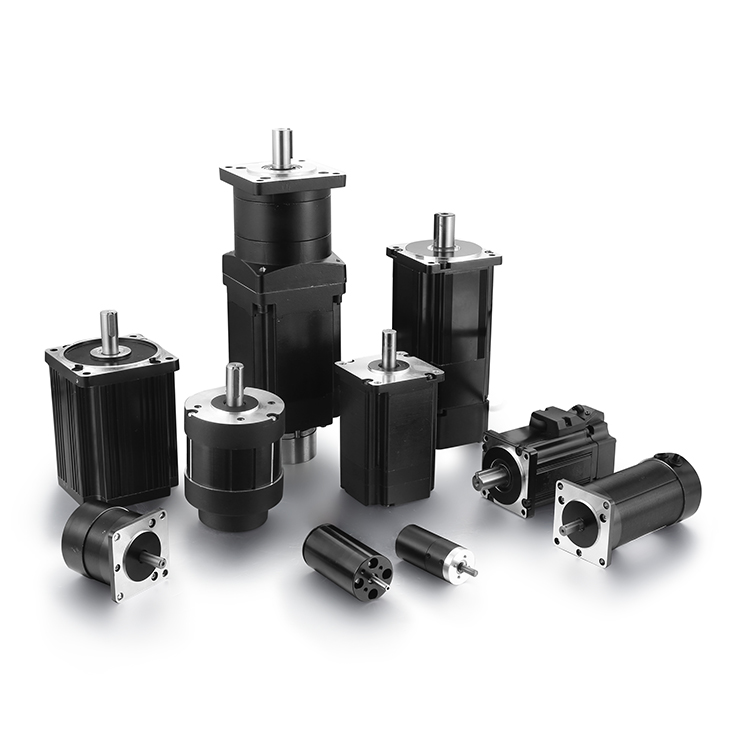
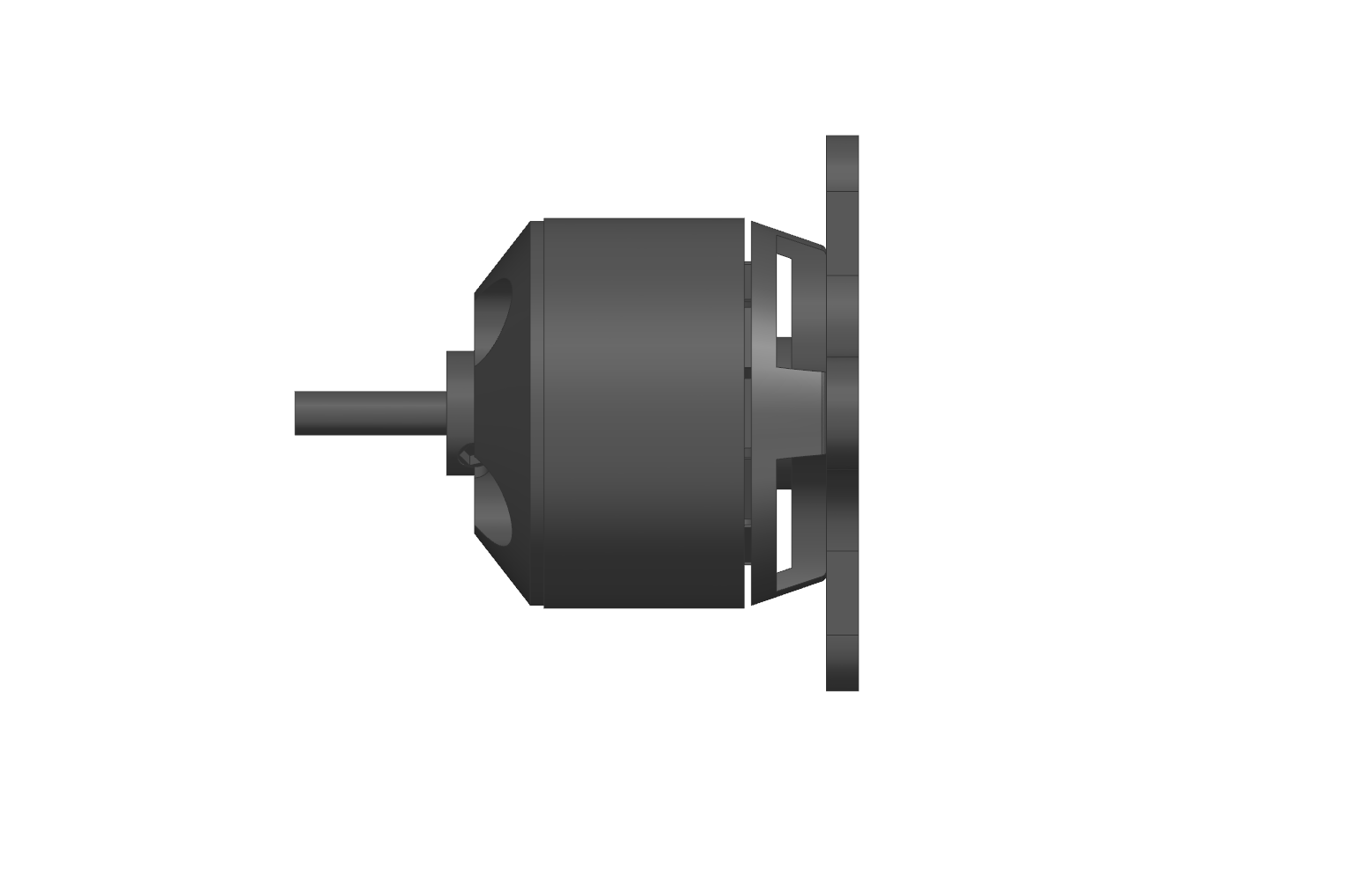
The BG70BL01 is one of the most suitable BG Motor products for variable-speed HVAC fan applications. It offers a power range of 150–500W, a voltage range of 12–310VDC, rated speeds from 1,500 to 6,000 rpm, and rated torque from 0.48 to 1.59 N·m. The motor is designed for S1/S2/S3 operating conditions and has a stated lifespan of up to 5,000 hours.
Its brushless architecture, high power density, electronic speed-control capability, and relatively compact structure make it suitable for applications such as HVAC fans, air circulation systems, ventilation equipment, and other variable-speed air-moving equipment.
For OEM customers developing HVAC equipment, BG Motor can also customize voltage, electrical performance, shaft dimensions, mounting flange, lead wires, insulation class, and drive configuration.
The BG65 is a 6.5-inch BLDC blower specifically associated with gas-premix heating systems. It provides approximately 110W of power at 230V, with a maximum airflow of 115 m³/h and maximum vacuum pressure of 3 kPa.
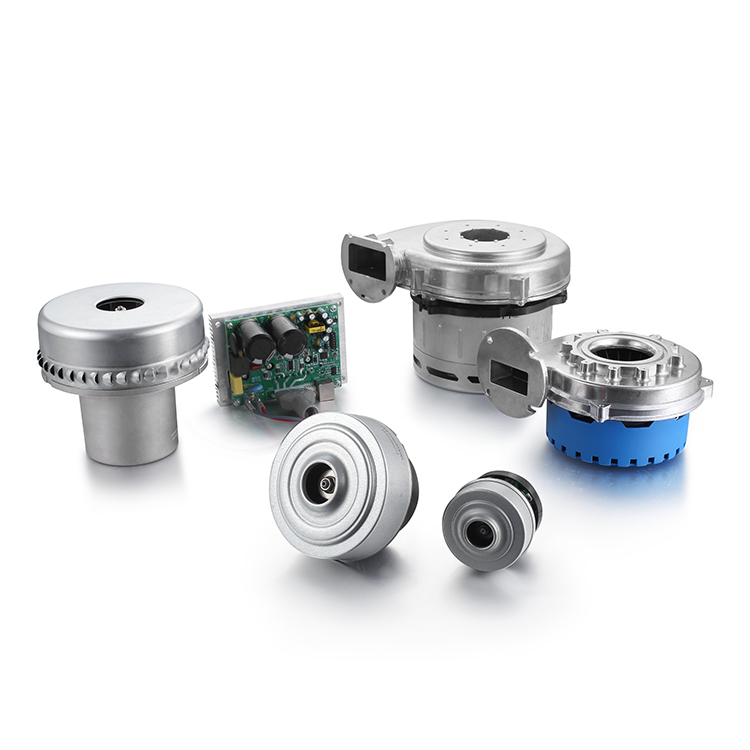
Its application range includes gas heating devices, fume and smoke extraction, and other equipment requiring controlled airflow. This makes BG65 particularly interesting for the heating and combustion-air side of HVAC-related equipment.
For applications requiring substantially greater airflow and power, BG Motor offers the BG73 series and BG73C1200Z001.
The BG73 is a 7.3-inch tangential bypass brushless blower available in 700W and 1200W versions, with maximum airflow up to 300 m³/h and maximum vacuum pressure of approximately 7 kPa.
The BG73C1200Z001 provides a 700–1200W power range, operates at 220–240VAC, 50/60Hz, and offers maximum airflow of approximately 264–296.4 m³/min according to the product specification. It is designed for high-speed air-moving applications and is particularly relevant to ventilation and exhaust equipment.
These higher-power blower solutions can be considered for industrial ventilation, exhaust systems, air-moving equipment, and specialized HVAC-related applications where higher airflow or pressure capability is required.
Choosing an HVAC motor should not be based only on rated wattage. A motor with higher power is not automatically the best solution if the application requires lower noise, precise speed regulation, compact dimensions, or high efficiency at partial load.
A practical selection process should consider:
| HVAC Requirement | Key Motor Parameter |
|---|---|
| Required airflow | Motor power + fan/impeller matching |
| Required air pressure | Torque + motor power |
| Variable airflow | Speed-control capability |
| Continuous operation | Thermal performance + service life |
| Residential application | Low noise + low vibration |
| Industrial ventilation | Power + durability |
| Compact HVAC equipment | Power density + motor dimensions |
| Heating equipment | Airflow + temperature resistance |
| OEM HVAC equipment | Voltage, shaft, mounting and control customization |
The motor should ultimately be evaluated together with the fan, impeller, duct system, controller, operating point, and required airflow/pressure, rather than as an isolated component.
HVAC applications place special demands on electric motors because these systems often operate continuously and must balance energy efficiency, reliability, airflow performance, noise, and cost. This is why motor manufacturing capability and customization experience are increasingly important for HVAC equipment manufacturers.
BG Motor has more than 30 years of motor manufacturing experience and provides customized DC, BLDC, AC, and geared motor solutions for industrial applications. The company's product development and manufacturing capabilities support customized requirements involving motor dimensions, electrical performance, shaft configuration, mounting structure, wiring, drive systems, and other application-specific parameters.
The company also emphasizes OEM/ODM development, R&D and innovation, customized motor solutions, quality assurance, and responsive technical support, allowing HVAC manufacturers to develop motors according to their equipment rather than adapting the equipment around an off-the-shelf motor.
As HVAC systems move toward higher efficiency, variable-speed operation, intelligent control, and more compact equipment, the motor is becoming an increasingly important part of the overall system architecture. For motor manufacturers, the future opportunity is therefore not simply to produce a motor that rotates reliably, but to develop propulsion solutions that work efficiently and intelligently within the complete HVAC system.
HVAC is a complex system that combines heating, ventilation, air conditioning, air distribution, controls, and other mechanical equipment to create a comfortable and controlled indoor environment. From the blower inside a home heating system to the ventilation fans in a commercial building, electric motors provide the mechanical power that keeps air moving and equipment functioning.
For HVAC manufacturers, selecting the right motor means balancing efficiency, airflow, pressure, speed, noise, reliability, thermal performance, and customization requirements. BG Motor's BG70BL01, BG65, BG73, and BG73C1200Z001 provide different power and airflow characteristics for a range of fan, blower, heating, ventilation, and air-moving applications, while customized motor development allows the solution to be adapted to specific HVAC equipment requirements.
As HVAC technology continues to evolve toward smarter and more energy-efficient systems, high-performance motor technology will remain one of the key components driving the next generation of heating, ventilation, and air-conditioning equipment.
 BACK
BACK
As a “barometer” of China's foreign trade, the 139th Canton Fair (April 2026…
The 2nd Advanced Motor Materials Innovation Forum has officially opened, as indu…
Global Electric Motor Industry UpdateRecently, the global electric motor industr…
BG Motor Resumes Full Production – February 24, 2026BG Motor has officially resu…
Chinese New Year Holiday Notice (2026)Dear Valued Customers and Partners,To cele…
With the continuous upgrading of global manufacturing, the rapid growth of new e…