SEARCH
 When there is only a little room left inside your equipment, should you choose a smaller motor or redesign the drive system?
This is a common challenge for engineers developing compact AGVs, service robots, automatic doors, and cleaning equipment. As products become smaller and more integrated, the space available for the motor continues to shrink, yet the requirements for torque, speed, load capacity, and operating life remain unchanged.
A motor that fits perfectly into the available space is not necessarily the right motor. If it cannot deliver sufficient torque, overheats during continuous operation, or requires frequent maintenance, the compact design may create bigger problems later.
The real challenge is to find a motor that fits the mechanical layout while still meeting the equipment's performance requirements. In many cases, this requires looking beyond motor dimensions and considering the entire drive system.
One of the most common mistakes in compact motor selection is choosing a motor based on its outer diameter or length before determining what the equipment actually needs.
Consider an AGV moving a loaded trolley through a warehouse. Its motor must provide enough starting torque to overcome inertia and rolling resistance, maintain the required travel speed, and handle repeated starts and stops throughout the working day. A compact cleaning device may face a different challenge: it needs enough torque to drive its mechanism while operating within a restricted enclosure with limited airflow.
Before comparing motor dimensions, engineers should establish the main operating parameters.
| Selection Parameter | What Engineers Need to Determine |
|---|---|
| Supply voltage | Available DC voltage, such as 12 V, 24 V, or 48 V |
| Required torque | Starting torque, running torque, and peak load |
| Operating speed | Required RPM under the actual working load |
| Power demand | Mechanical output power needed by the equipment |
| Duty cycle | Intermittent operation or continuous running |
| Installation space | Maximum diameter, length, shaft position, and mounting clearance |
| Operating environment | Ambient temperature, airflow, dust, moisture, and vibration |
These parameters help establish the motor's real performance requirements before its physical structure is selected.
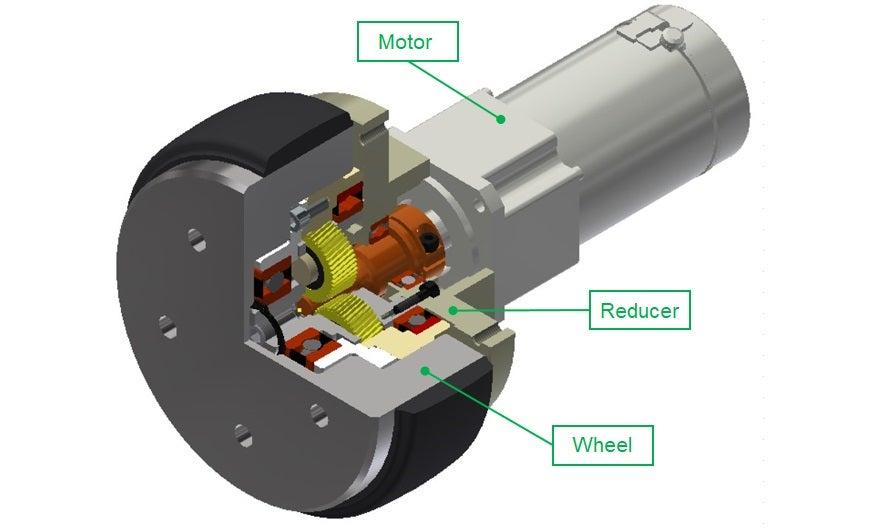
For example, a device that requires high torque at low speed may benefit from a compact geared DC motor rather than a high-speed motor connected directly to the load. The gearbox can reduce output speed while increasing available output torque, allowing the drive system to meet its mechanical requirements within a more practical design envelope.
When installation space is limited, motor structure becomes especially important. The goal is not simply to reduce every dimension, but to use the available space as effectively as possible.
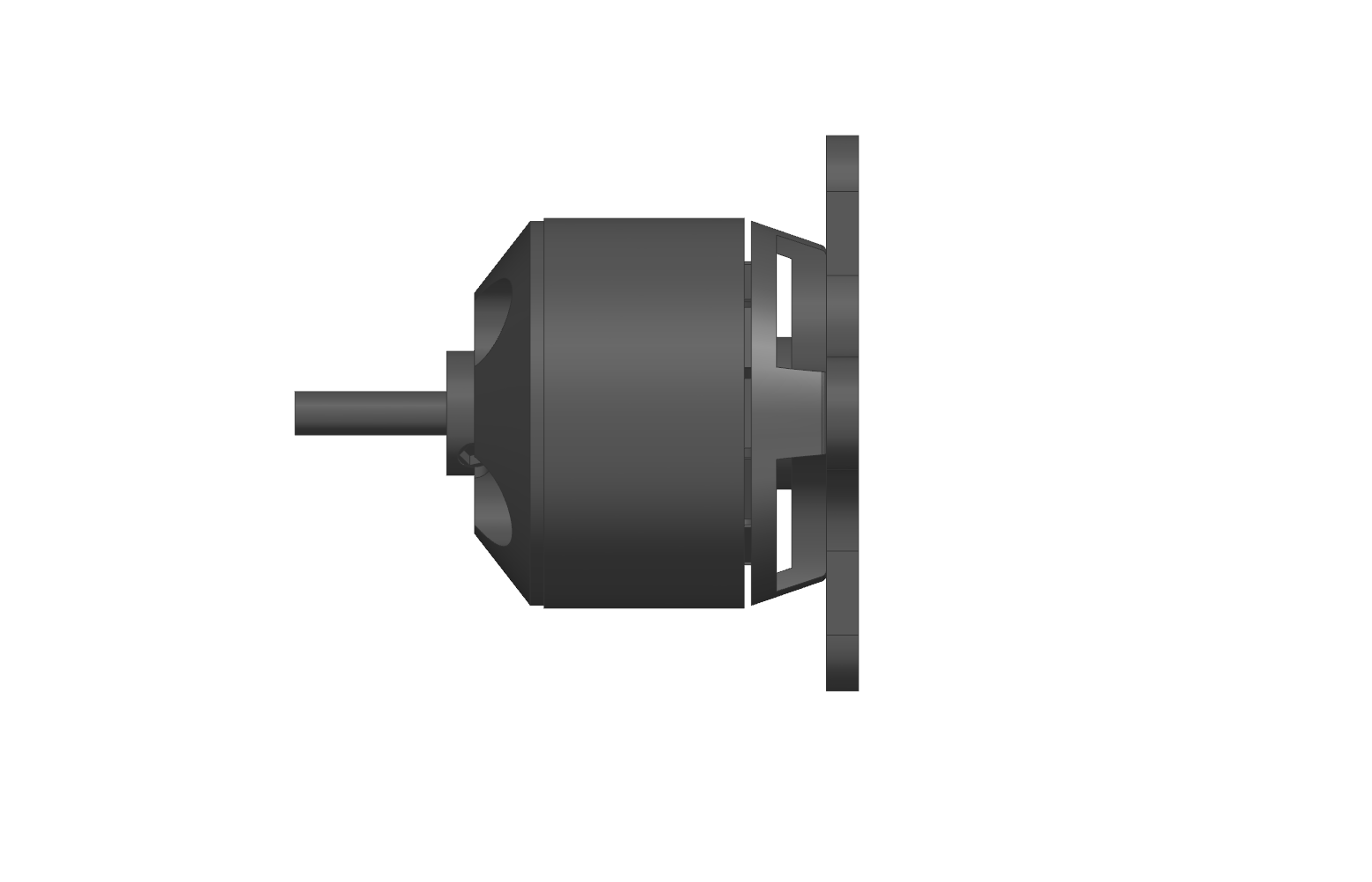
A direct-drive DC motor connects to the load without a gearbox. This arrangement can reduce the number of mechanical components and simplify the transmission system, making it useful when the equipment requires relatively high speed and the load can be driven directly.
However, if the application requires high torque at low speed, a direct-drive motor may need a larger electromagnetic structure or higher current to meet the load demand. Engineers should evaluate whether direct drive is genuinely the most space-efficient solution for the required operating point.
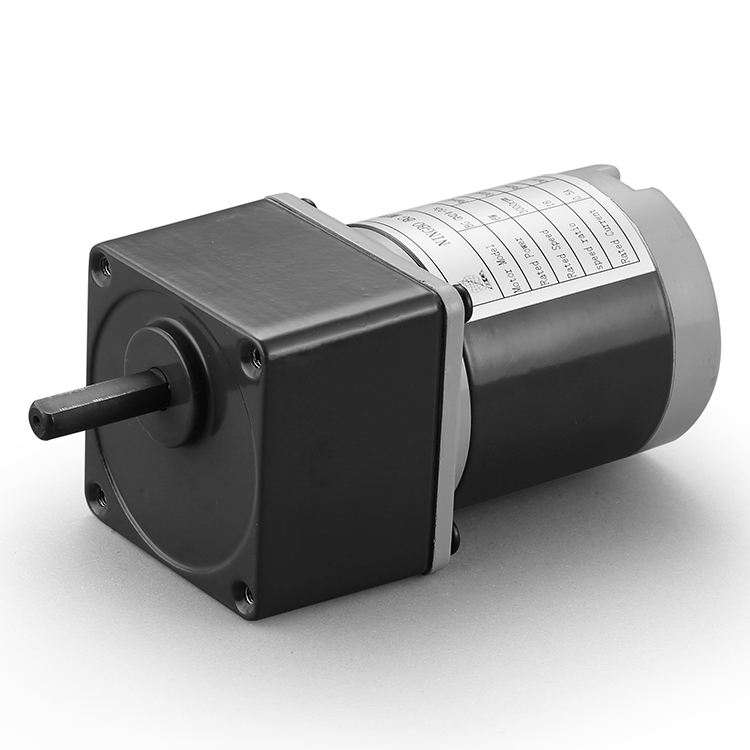 A geared DC motor combines a motor with a reduction gearbox to provide lower output speed and higher output torque. This makes it a practical choice for compact AGVs, robotic joints, automatic doors, and powered mechanisms where space is restricted but substantial torque is still required.
The gear ratio must be selected according to the required output speed and torque, while gearbox efficiency, backlash, noise, and service life should also be considered.
For instance, an automatic door may require controlled movement and enough torque to overcome mechanical resistance, while a compact AGV needs sufficient wheel torque to accelerate its load and climb any specified gradient. In both cases, a properly matched geared motor can be more practical than increasing the size of a direct-drive motor.
The key principle is simple: when space is limited, changing the motor structure can be more effective than simply choosing a smaller motor.
Yes, but only when the design matches the required operating conditions. A compact motor cannot escape the physical limits imposed by electromagnetic loading, current, heat generation, and available cooling. However, engineers can often improve the balance between size and performance through more appropriate motor selection and system integration.
Three factors deserve particular attention.
Winding and electromagnetic design: The winding arrangement, wire size, magnetic circuit, and electrical resistance affect torque production and losses. A well-matched design can deliver the required output without unnecessary current consumption, although the benefits depend on the motor's actual dimensions and operating conditions.
Gear ratio and transmission efficiency: For low-speed, high-torque applications, a suitable reduction ratio can help achieve the required output torque without demanding that the motor itself operate at an unnecessarily low speed. The gearbox must still be selected carefully because transmission losses, mechanical limits, and added dimensions affect the final result.
Peak versus continuous performance: A motor may handle a brief peak load but be unable to sustain that output throughout a long operating cycle. Selection should therefore distinguish starting torque, peak torque, and continuous torque rather than relying on a single maximum value.
The objective is not to make a motor deliver unlimited power from a smaller package. It is to avoid wasting available space on a design that does not match the application's actual workload.
Compact equipment often has less internal air circulation and less room for heat to escape. As a result, thermal management can become one of the most important limitations when selecting a small DC motor.
When current flows through the windings, electrical resistance generates heat. Under sustained loads, the motor temperature rises until heat dissipation balances heat generation or the motor reaches a limiting temperature. If the motor is undersized or poorly ventilated, it may overheat even though its dimensions and short-term output initially appear suitable.
Engineers can address this challenge by considering several design options:
Select a motor with suitable continuous torque and current ratings instead of relying only on peak output.
Optimize the motor's operating point and gearbox ratio to avoid unnecessary current demand.
Evaluate airflow, housing contact, and available heat-dissipation paths within the equipment.
Confirm temperature rise under representative load and duty-cycle conditions.
Check the manufacturer's allowable operating temperature and the temperature limits of surrounding components.
For example, a cleaning machine may operate for extended periods inside a compact housing, while an automatic door may run intermittently with brief periods of high starting torque. These applications may have similar space constraints but very different thermal requirements.
A successful compact design must therefore consider both mechanical fit and thermal stability.
Two motors with similar output ratings may differ significantly in how easily they can be integrated into a product. In compact equipment, mounting dimensions, shaft orientation, connector placement, and transmission layout can determine whether the motor fits without major changes to the housing.
This is where customization can provide meaningful value.
Depending on the application and manufacturing feasibility, engineers may consider:
Customized shaft dimensions: Adjust shaft diameter, length, or geometry to match the driven mechanism.
Modified mounting arrangements: Adapt mounting holes, flange dimensions, or fixing structures to fit the available enclosure.
Optimized motor and gearbox combinations: Select a suitable body size and reduction ratio to balance installation space, output torque, and speed.
Electrical integration: Match voltage, wiring, connector position, and control requirements to the existing system.
Application-specific validation: Verify output performance, temperature rise, noise, and durability within the actual equipment.
These changes can reduce the need to redesign the entire machine around a standard motor. Instead of forcing the product to accommodate an unsuitable component, the motor configuration can be developed around the equipment's mechanical and electrical requirements.
Customization does not automatically improve performance, but it can help resolve conflicts between installation space and functional requirements when the design is validated properly.
Imagine an AGV manufacturer developing a smaller warehouse vehicle. The new chassis must fit through narrower aisles, so the space available for each drive motor is reduced. However, the vehicle still needs to carry the specified payload, accelerate smoothly, and operate throughout repeated warehouse shifts.
Choosing a motor with a smaller body is only the first step. The engineering team should first calculate the required wheel torque based on vehicle mass, wheel radius, rolling resistance, acceleration, and any specified gradient. It should then determine the required wheel speed and identify a motor and gearbox combination capable of meeting those requirements.
The team must also account for gearbox efficiency, starting conditions, repeated acceleration, and heat accumulation during operation. Finally, the motor's mounting structure and shaft dimensions should be checked against the available chassis space.
A compact geared DC motor may be an appropriate solution if it satisfies these requirements. If no standard configuration meets the full set of constraints, a customized motor or gearbox arrangement may be worth evaluating.
This example illustrates why compact motor selection is an engineering optimization problem rather than a simple search for the smallest available product.
Choosing a DC motor for a compact device requires more than comparing outer diameter and body length. Engineers must first establish the required voltage, torque, speed, power, duty cycle, and environmental conditions, then identify a motor structure that fits the available space without compromising the equipment's operating requirements.
Direct-drive DC motors may suit applications that prioritize simplicity and speed, while geared DC motors can provide a practical solution when high output torque and low speed are required within a compact installation. Winding design, thermal management, transmission efficiency, and mounting customization can further influence the final result.
At BG Motor, the objective of application-specific motor selection is to balance installation dimensions with real operating requirements. By evaluating the complete drive system rather than reducing motor size in isolation, equipment manufacturers can develop more compact products without unnecessarily sacrificing torque, efficiency, or long-term reliability.
 BACK
As a “barometer” of China's foreign trade, the 139th Canton Fair (April 2026…
The 2nd Advanced Motor Materials Innovation Forum has officially opened, as indu…
Global Electric Motor Industry UpdateRecently, the global electric motor industr…
BG Motor Resumes Full Production – February 24, 2026BG Motor has officially resu…
Chinese New Year Holiday Notice (2026)Dear Valued Customers and Partners,To cele…
With the continuous upgrading of global manufacturing, the rapid growth of new e…