SEARCH
With the rapid growth of e-commerce, logistics distribution, and intelligent manufacturing, more and more companies are investing in highly automated smart warehouse systems to improve storage efficiency, reduce labor costs, and optimize supply chain operations. In modern logistics centers, a wide range of automated equipment is used to handle material transportation, order sorting, pallet movement, and high-density storage tasks. Among all these systems, electric motors serve as the core power components that enable automated machinery to operate continuously and efficiently.
In a smart warehouse environment, motors must not only provide reliable power output but also maintain high efficiency, low noise levels, and long service life, because warehouse automation equipment often operates continuously for extended periods of time. Therefore, when designing automated warehouse systems, the performance and reliability of electric motors become critical factors that directly influence the overall operational efficiency of the logistics infrastructure.
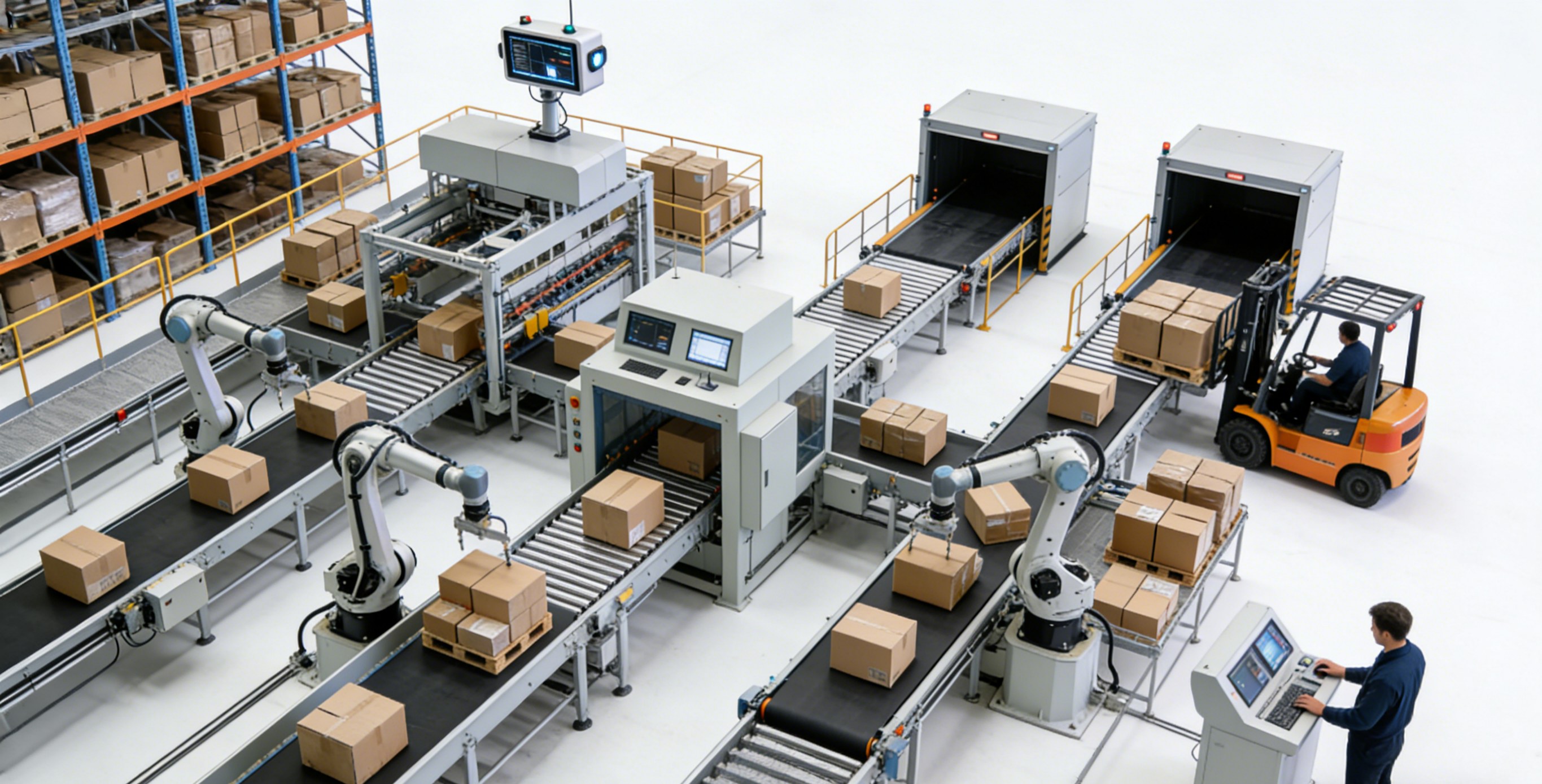
Conveyor systems are among the most widely used pieces of equipment in automated warehouses, as they are responsible for transporting goods between different operational zones such as receiving areas, sorting stations, packaging lines, and shipping docks. In large e-commerce fulfillment centers, thousands of parcels move through conveyor lines every hour, enabling fast and efficient order processing.
To ensure smooth and stable operation, conveyor systems typically rely on AC geared motors, drum motors, or DC gear motors to drive belts and rollers. These motors must deliver consistent speed control and reliable torque output while maintaining durability under continuous operation. Since conveyor lines often run for many hours each day, energy efficiency and operational stability are key design considerations when selecting motors for such systems.
As global online shopping continues to expand, automated sorting systems have become essential components of modern logistics facilities. These systems are capable of automatically identifying packages and directing them to the correct destinations based on order data, significantly improving processing speed and reducing manual labor.
Sorting equipment such as cross-belt sorters, tilt-tray sorters, and sliding-shoe sorters relies heavily on electric motors to drive the sorting mechanisms and directional control components. In these applications, brushless DC motors and servo motors are commonly used because they provide high efficiency, fast response times, and precise motion control. These characteristics allow automated sorting machines to maintain high accuracy even while operating at very high speeds.
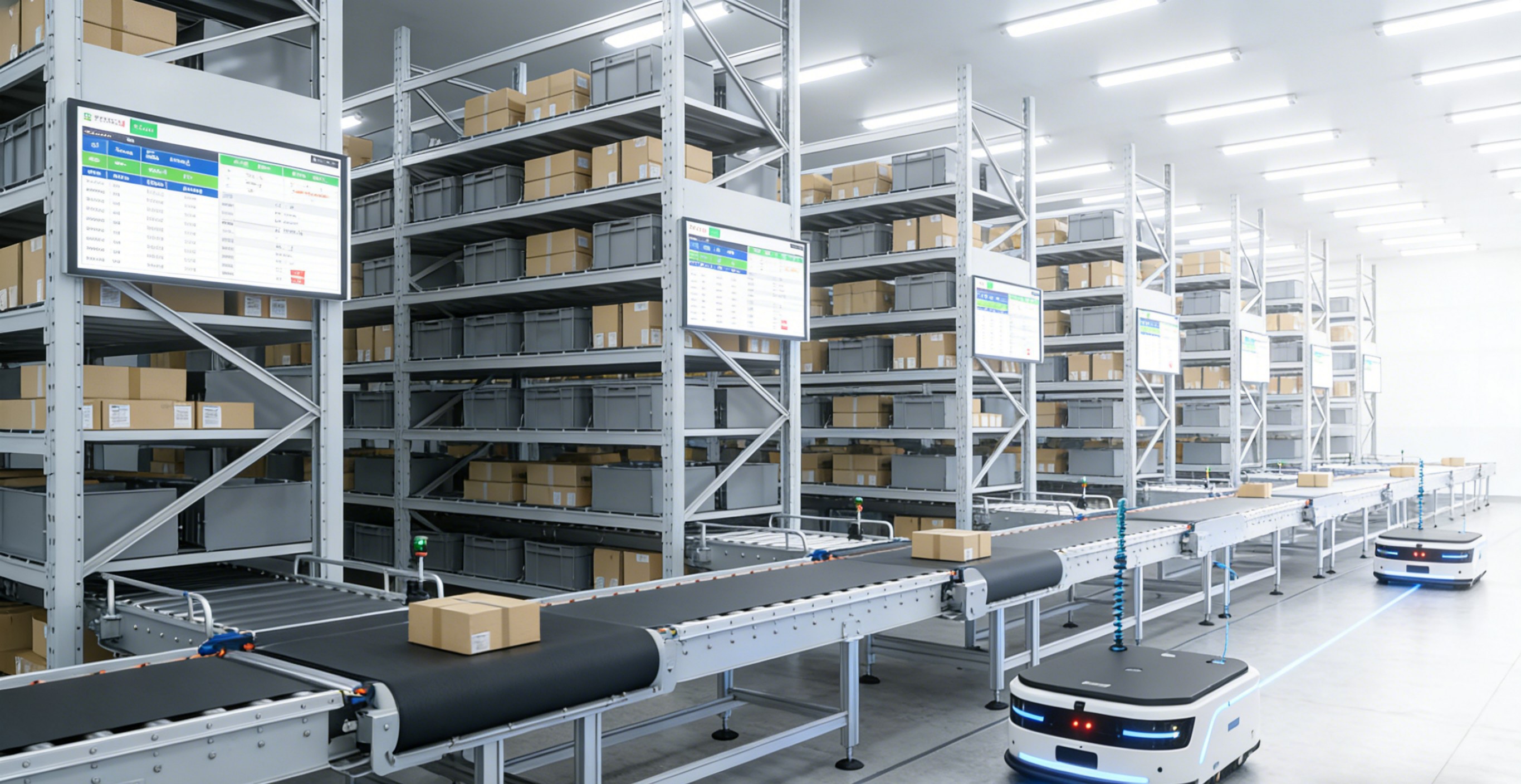
In recent years, mobile robotics has become one of the most important technologies in smart warehouse environments. Autonomous robots can transport goods, move shelves, and deliver materials across warehouse floors without human intervention, significantly improving operational flexibility and efficiency.
For example, Automated Guided Vehicle and Autonomous Mobile Robot are widely used in modern warehouse automation systems. These robots rely on electric motors to drive their wheel systems and steering mechanisms, enabling precise movement and navigation within warehouse spaces.
Because these robots often operate in compact environments while carrying significant loads, they typically utilize brushless DC motors, planetary gear motors, or hub motors that can deliver high torque output within a relatively small form factor. These motors provide both energy efficiency and stable performance, which are critical for maintaining reliable robot operations throughout the warehouse.
In large industrial warehouses and logistics distribution centers, automated high-bay storage systems are commonly used to maximize storage density and improve inventory management efficiency. One typical example is the Automated Storage and Retrieval System, which uses stacker cranes to automatically store and retrieve goods from tall racking structures.
In these systems, electric motors are responsible for driving lifting mechanisms, horizontal travel systems, and fork handling devices. Because these operations require precise positioning and stable movement, high-performance servo motors and high-torque geared motors are often selected for such applications. By integrating reliable motor drive systems, automated storage systems can significantly increase warehouse space utilization while ensuring efficient material handling operations.
Smart logistics does not stop when a package leaves the warehouse. Once automated systems have optimized storage, sorting, picking, and internal transportation, the next challenge is how to move goods efficiently from the distribution center to the final destination. This is where drone delivery is becoming an increasingly interesting part of the automated logistics ecosystem.
While conveyors, AGVs, AMRs, and automated storage systems handle the movement of goods inside logistics facilities, delivery drones can extend this automation into the last-mile transportation stage. By using autonomous flight systems, drones can transport lightweight parcels, medical supplies, emergency materials, and other time-sensitive goods without relying entirely on traditional road transportation.
However, aerial logistics introduces a completely different set of motor requirements. Unlike warehouse equipment, which can operate on a stable surface, a delivery drone must generate continuous thrust while maintaining a low overall weight. The propulsion system therefore has a direct impact on payload capacity, flight endurance, acceleration, and operational reliability.
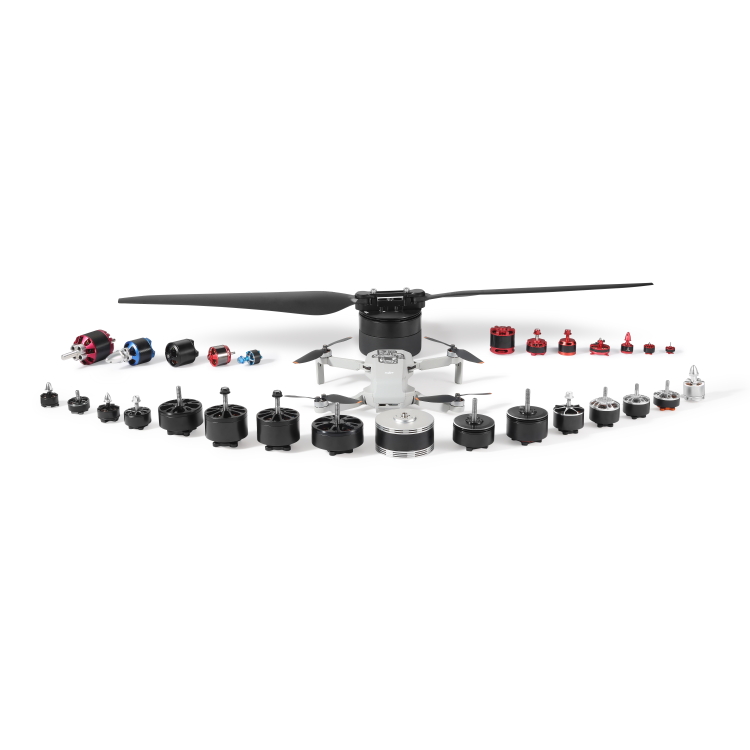
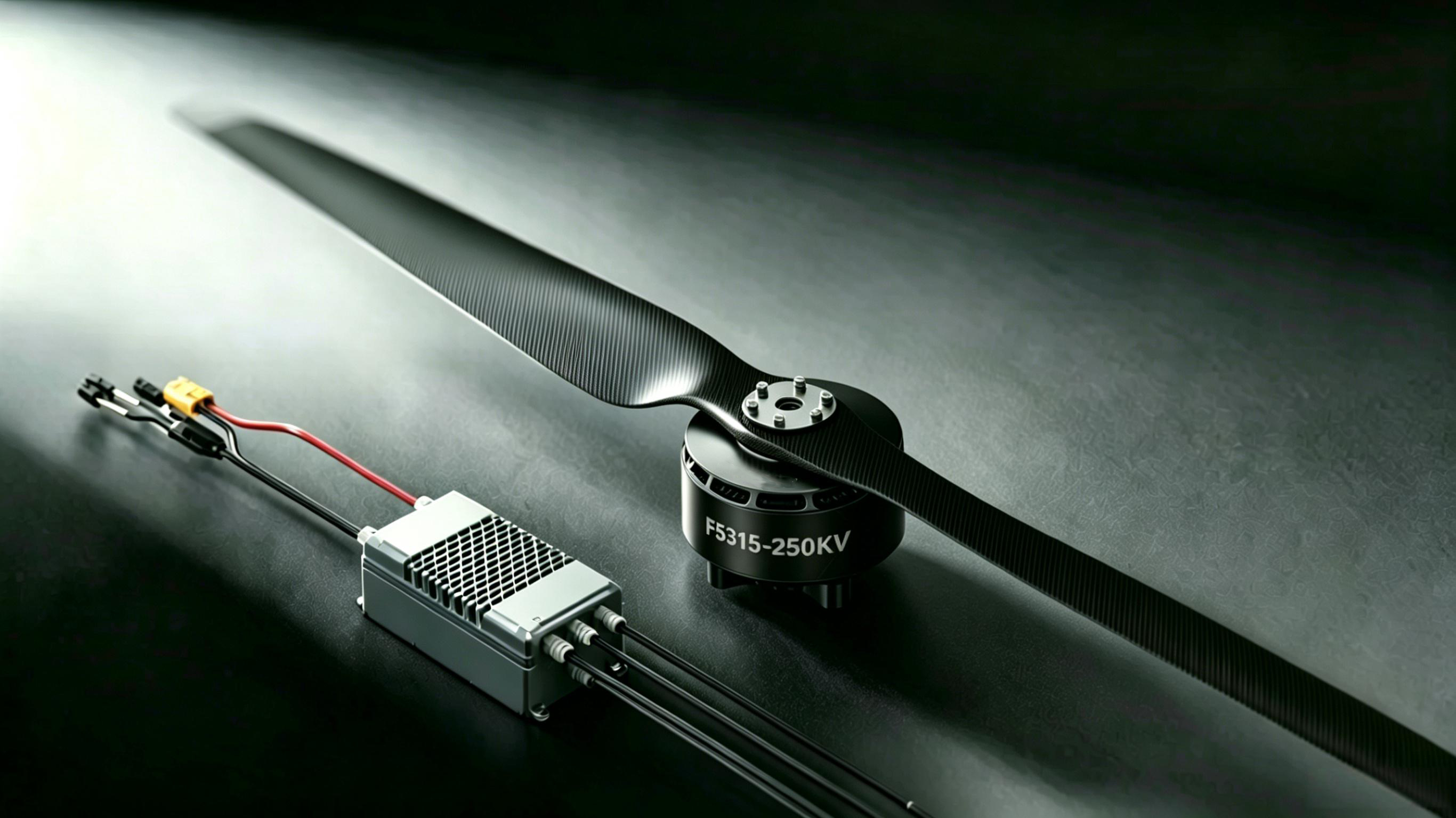
At the heart of a delivery drone's propulsion system is the brushless motor. The motor works together with the propeller, ESC, battery, and flight controller to convert electrical energy into controlled aerodynamic thrust.
For logistics drones, motor selection cannot simply focus on maximum power. Engineers need to balance thrust, efficiency, motor weight, KV rating, propeller size, operating voltage, thermal performance, and continuous-load capability according to the drone's overall design.
For example, larger delivery platforms carrying heavier payloads generally require larger outer-rotor brushless motors capable of driving larger propellers and producing high static thrust. Meanwhile, smaller delivery drones may prioritize a lighter propulsion system and higher efficiency to extend flight time.
This makes the motor an important link between automated logistics and autonomous aerial transportation. As smart warehouses become increasingly connected with automated delivery networks, high-performance drone motors can help extend the logistics chain from warehouse automation to last-mile aerial delivery.
For B2B drone manufacturers and logistics solution providers, a reliable propulsion system is therefore not simply a component—it is an important part of the overall delivery platform.
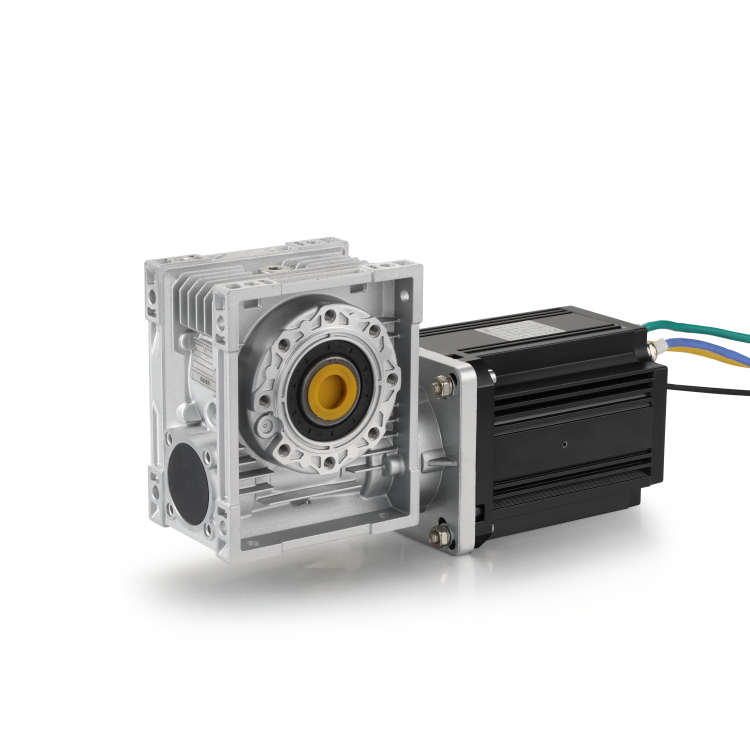
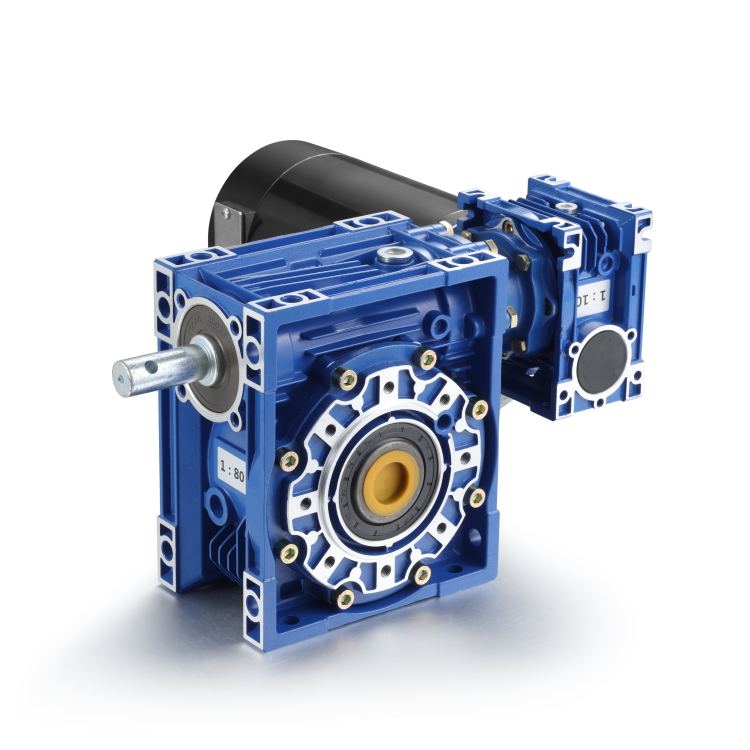
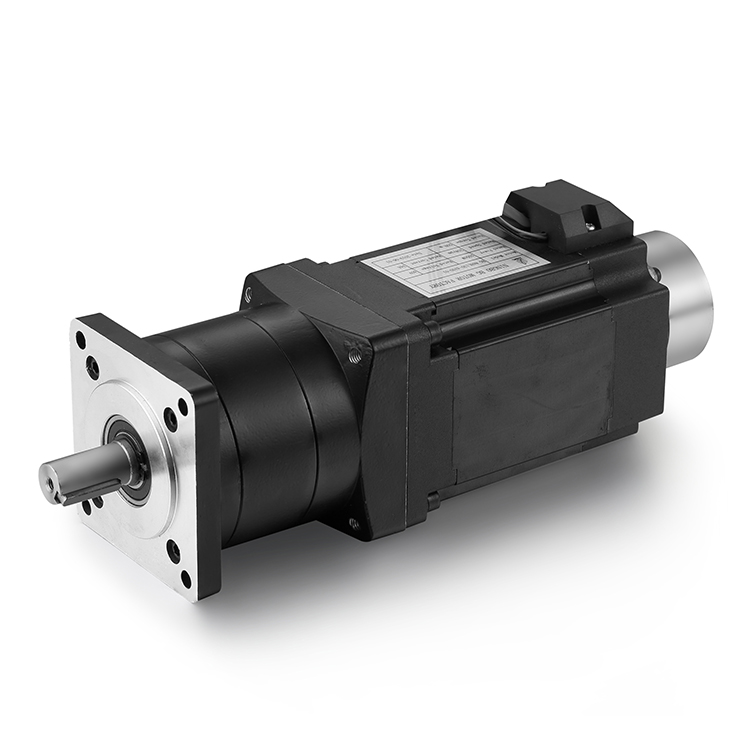
The future of logistics will not be defined by a single automated machine, but by how different technologies work together across the entire supply chain. Inside the warehouse, conveyors, sorting systems, AGVs, AMRs, and automated storage equipment are making material handling faster and more intelligent. Beyond the warehouse, autonomous delivery vehicles and UAVs are opening new possibilities for flexible last-mile transportation.
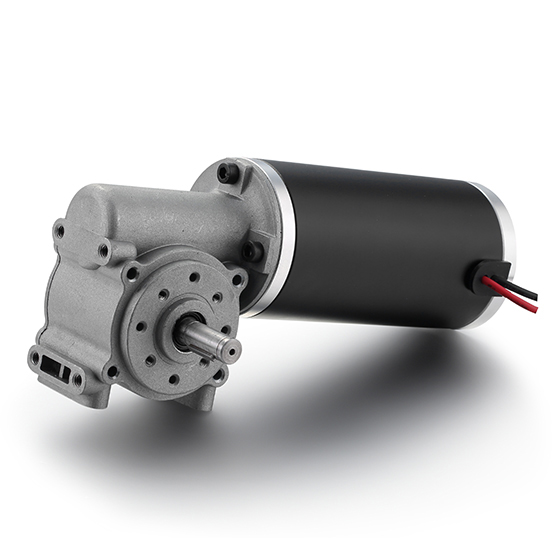
Electric motors remain at the center of this transformation. From high-torque geared motors driving warehouse robots to lightweight, high-efficiency brushless motors powering UAV propulsion systems, different logistics applications require different motor architectures and performance characteristics.
As automated logistics continues to move from the warehouse floor into the air, motor technology will play an increasingly important role in connecting every stage of the delivery process.
For customized motor requirements, BG Motor provides application-oriented motor solutions for industrial automation and logistics equipment, while BOGONG SUN / BGS MOTOR develops specialized outer-rotor brushless motors for UAV propulsion applications.
 BACK
BACK
As a “barometer” of China's foreign trade, the 139th Canton Fair (April 2026…
The 2nd Advanced Motor Materials Innovation Forum has officially opened, as indu…
Global Electric Motor Industry UpdateRecently, the global electric motor industr…
BG Motor Resumes Full Production – February 24, 2026BG Motor has officially resu…
Chinese New Year Holiday Notice (2026)Dear Valued Customers and Partners,To cele…
With the continuous upgrading of global manufacturing, the rapid growth of new e…